Natural Scientific 991 manual · Chapter 13 of 18
Probability distributions
Normal, binomial and Poisson probabilities, plus the inverse normal.
13.1Open the Distribution app#
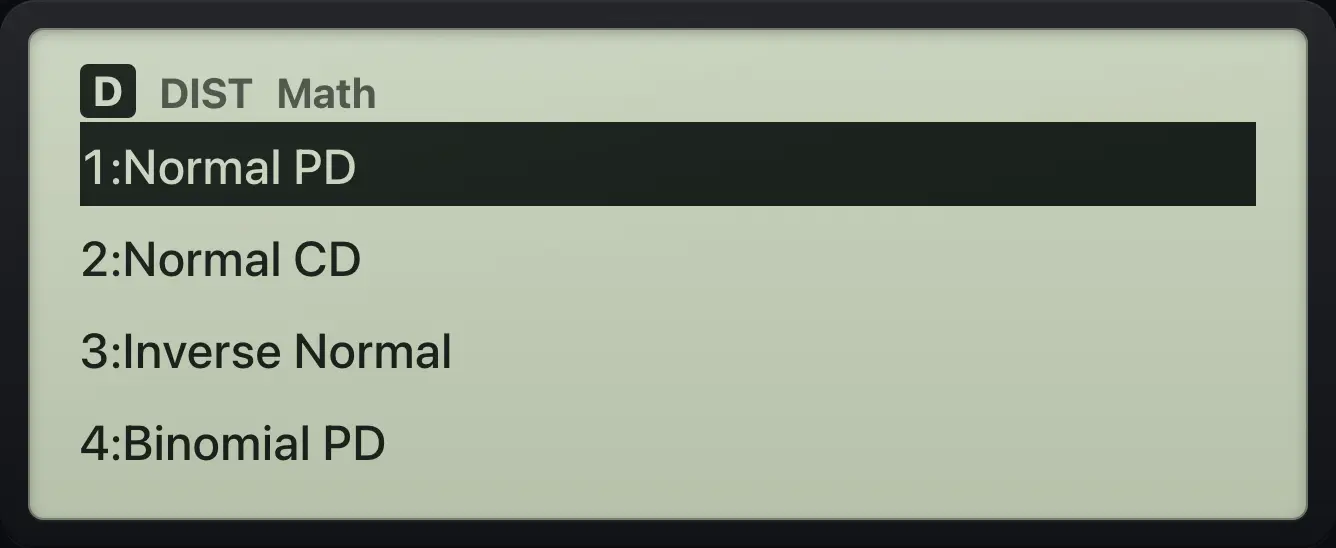
Press MENU then 7.
| Number | Item | Asks for |
|---|---|---|
| 1 | Normal PD | x, σ, μ |
| 2 | Normal CD | Lower, Upper, σ, μ |
| 3 | Inverse Normal | Area, σ, μ |
| 4 | Binomial PD | x, N, p |
| 5 | Binomial CD | x, N, p |
| 6 | Poisson PD | x, λ |
| 7 | Poisson CD | x, λ |
Fill in the form pressing = after each box. For σ and μ the standard values 1 and 0 are already filled in; just press = to accept them. After the last box the answer appears. Press = or AC to go back and try again.
13.2Normal distribution probabilities#
Normal PD gives the height of the bell curve at x. Normal CD gives the probability that a value falls between a lower and upper limit. Inverse Normal gives the value x with a given area to its left.
Normal PD at 0
Normal PD, x = 0, keep σ = 1 and μ = 0.
MENU710=1=0=
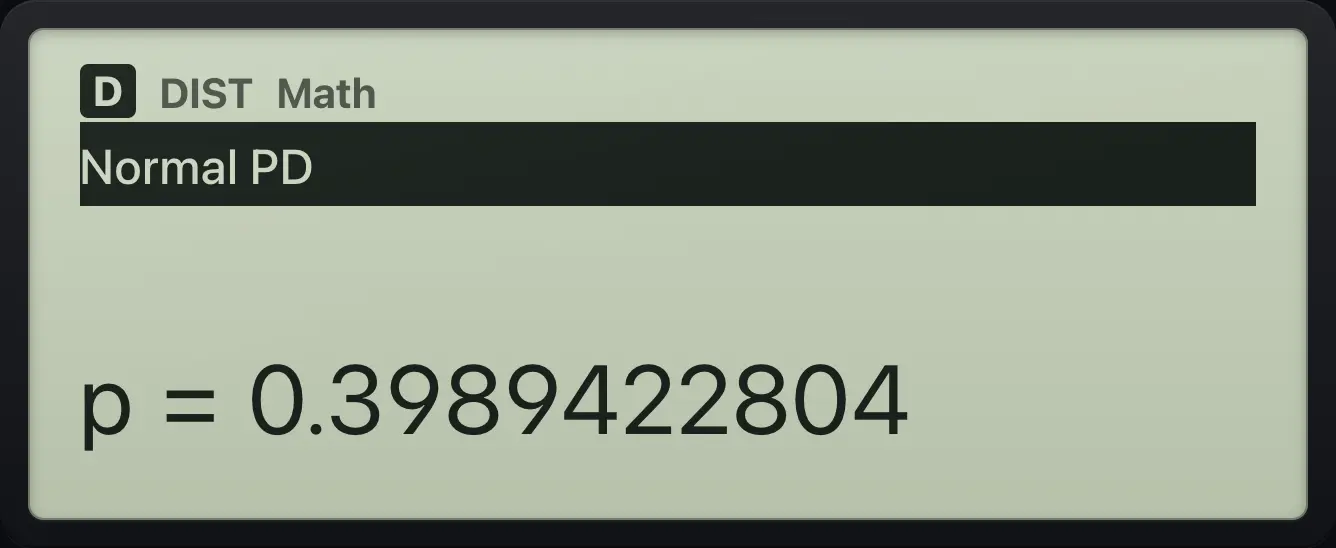
p=0.3989422804Within one standard deviation
Normal CD from -1 to 1, with σ = 1 and μ = 0.
MENU72(−)1=1=1=0=
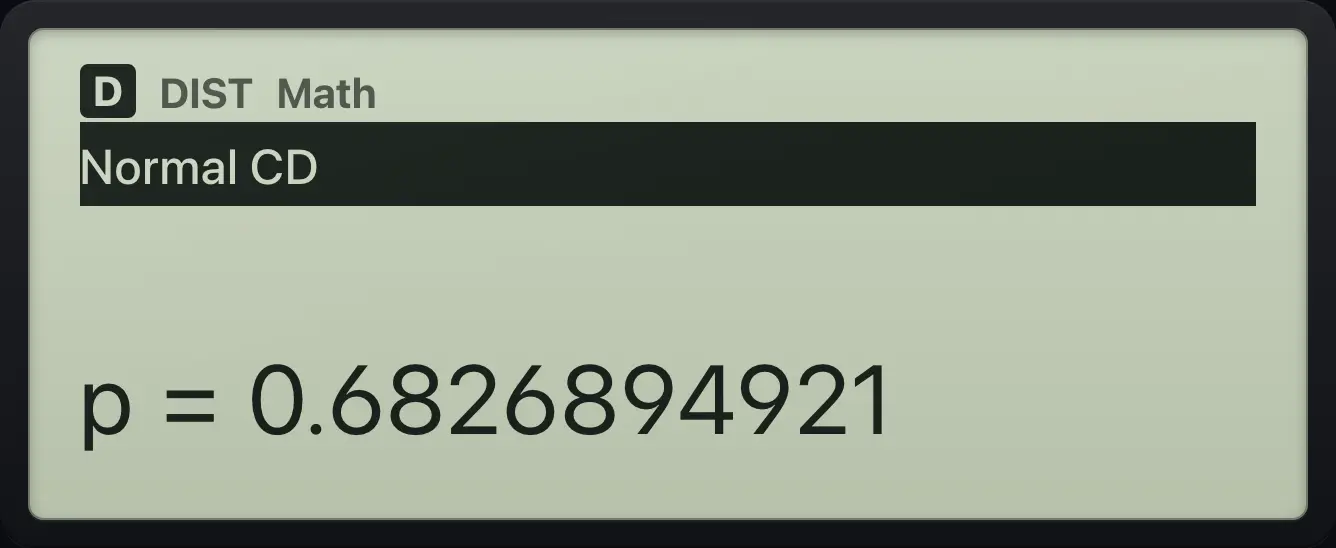
p=0.6826894921With your own mean and spread
Between 90 and 110, σ = 10, μ = 100.
MENU7290=110=10=100=
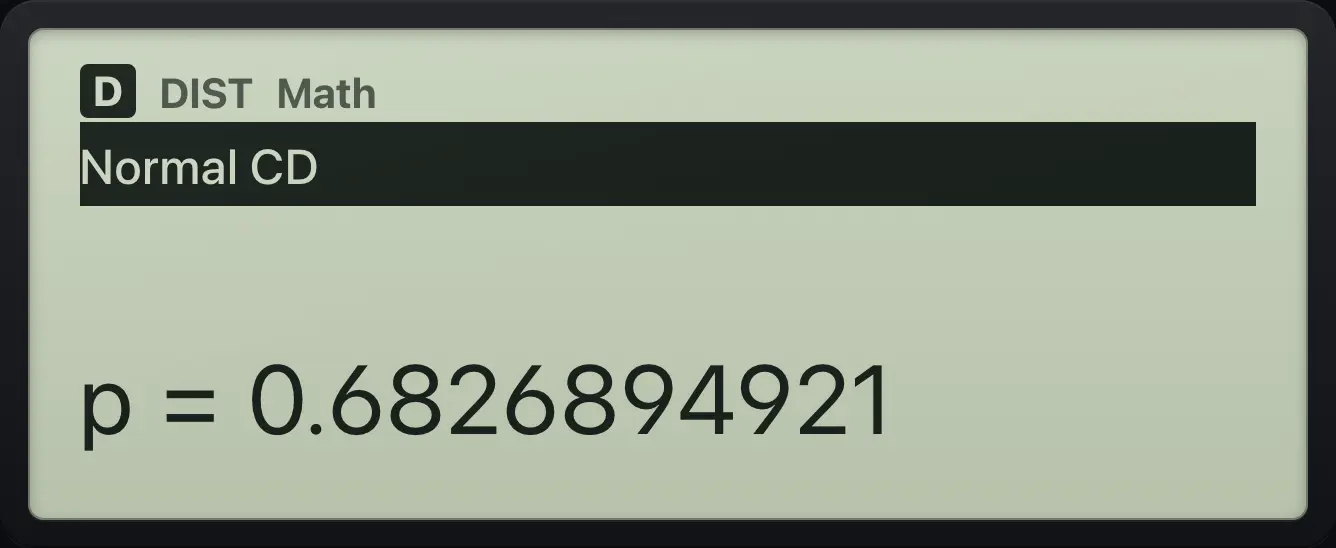
p=0.6826894921Inverse normal
Area 0.975 with σ = 1, μ = 0.
MENU730.975=1=0=
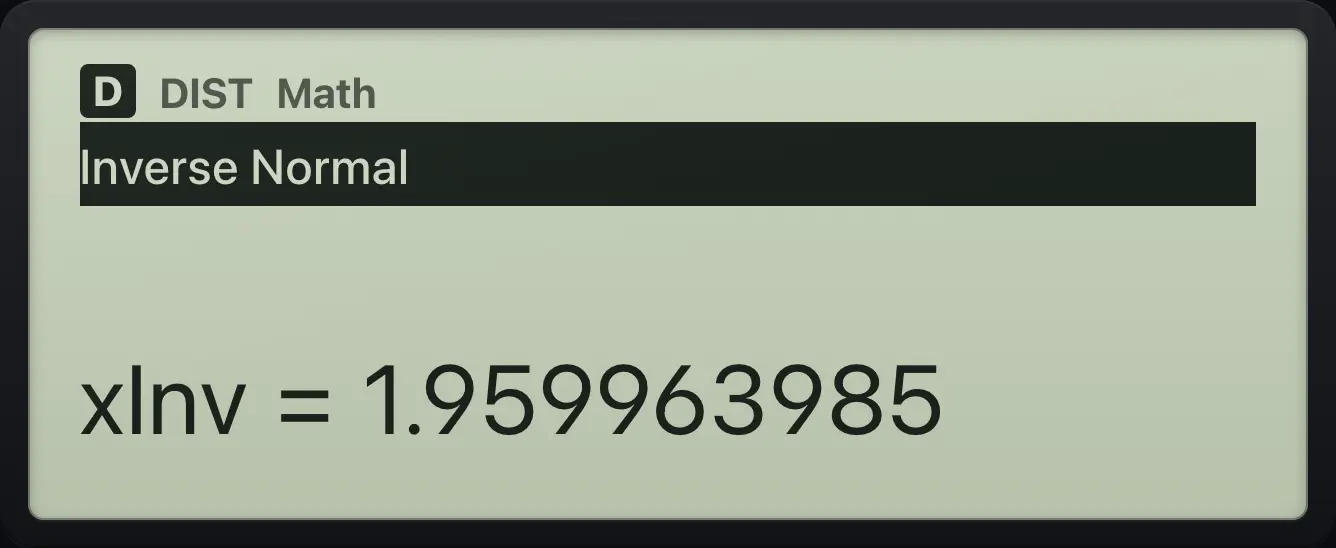
xInv=1.95996398513.3Binomial probabilities#
Binomial PD is the probability of exactly x successes in N tries when each try has probability p. Binomial CD is the probability of x or fewer. N and x must be whole numbers and p must be between 0 and 1.
Exactly 3 heads in 5 flips
Binomial PD: x = 3, N = 5, p = 0.5.
MENU743=5=0.5=
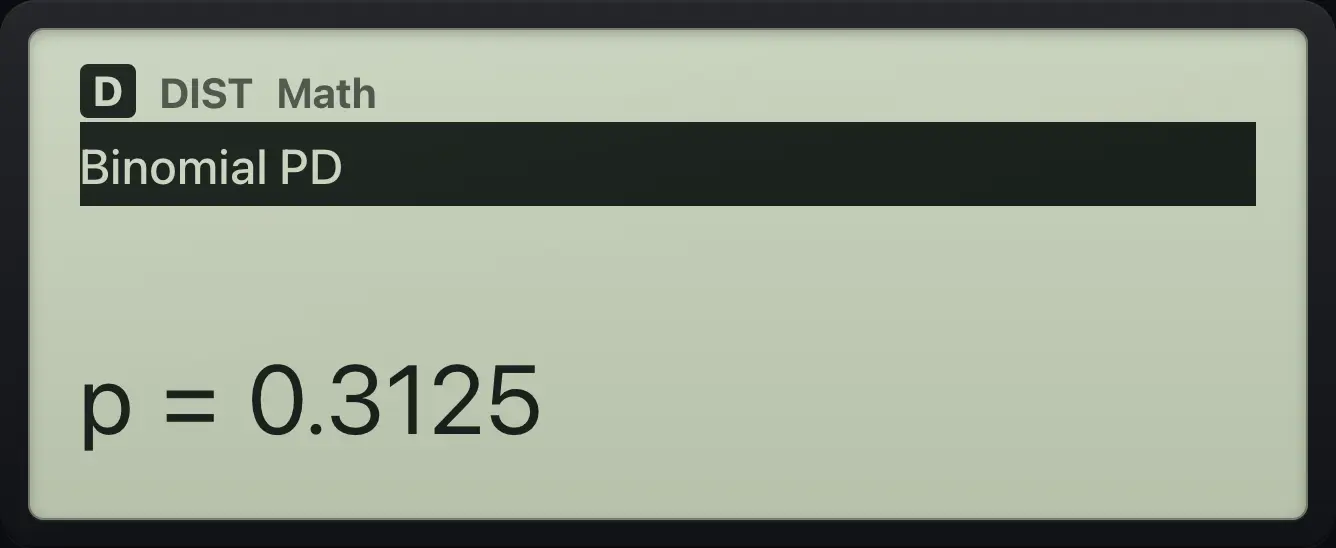
p=0.3125At most 2 heads in 4 flips
Binomial CD: x = 2, N = 4, p = 0.5.
MENU752=4=0.5=
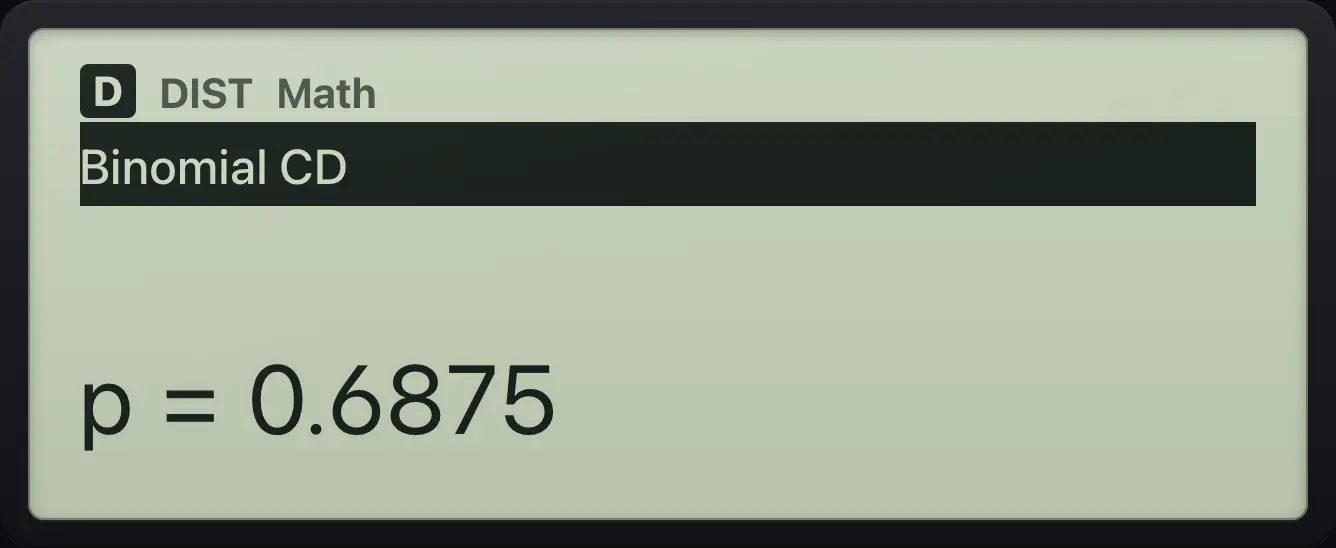
p=0.687513.4Poisson probabilities#
Poisson PD is the probability of exactly x events when the average is λ. Poisson CD is the probability of x or fewer.
Poisson PD
x = 2, λ = 3.
MENU762=3=
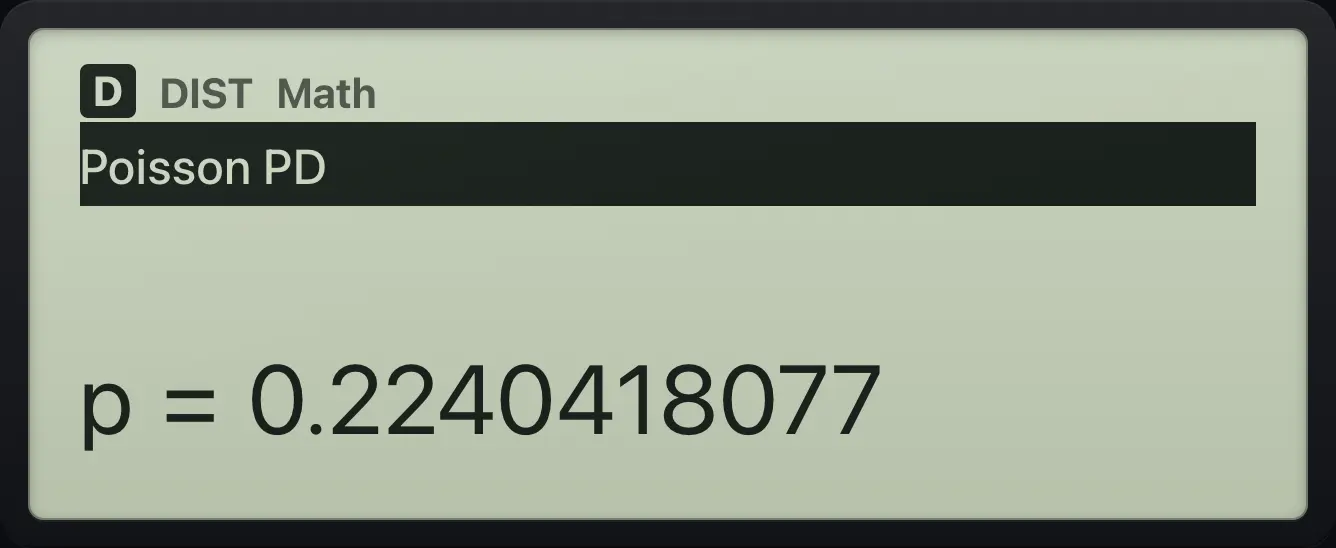
p=0.2240418077Poisson CD
x = 2, λ = 3.
MENU772=3=
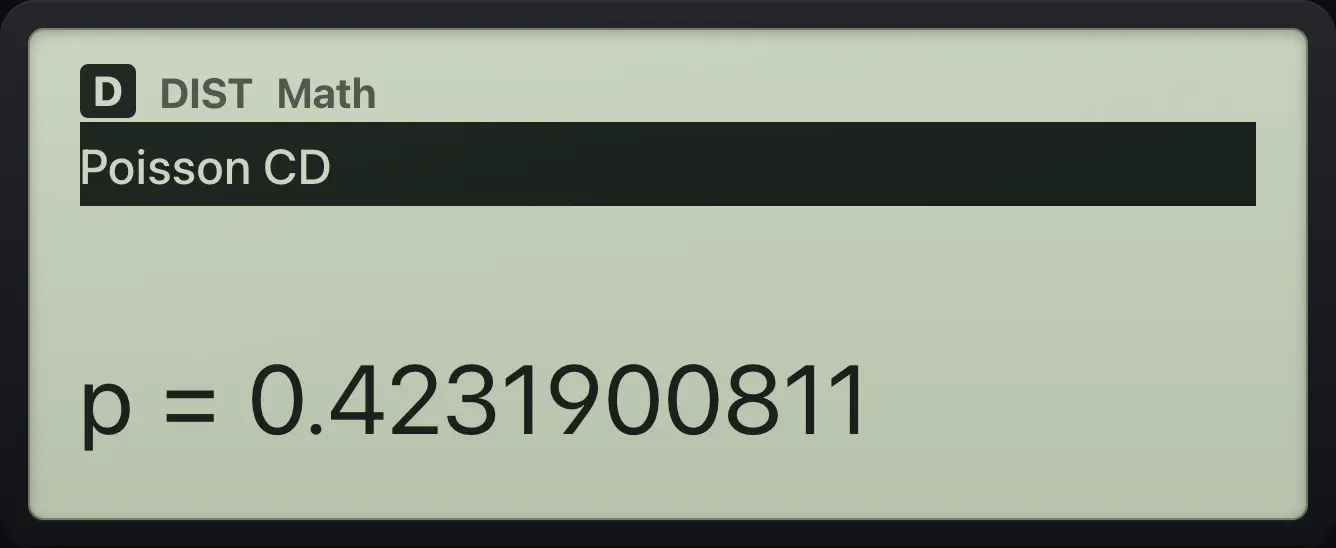
p=0.4231900811fx-991EX ClassWiz is a trademark of Casio Computer Co., Ltd.. Trident Calculator is an independent product by South View Studios and is not affiliated with, sponsored by or endorsed by Casio. The name is used only to describe the kind of calculator this model resembles; Trident's names, keys, display, fonts and software are its own clean-room design.