Trident Help

Classic CAS manual · Chapter 8 of 16

Algebra: expand, factor and simplify

Automatic simplification, expand, factor, common denominators and polynomial tools.

8.1Automatic simplification#

Every answer is simplified for you: like terms are combined, powers are merged and common factors cancel.

Example 8.1

Combine like terms

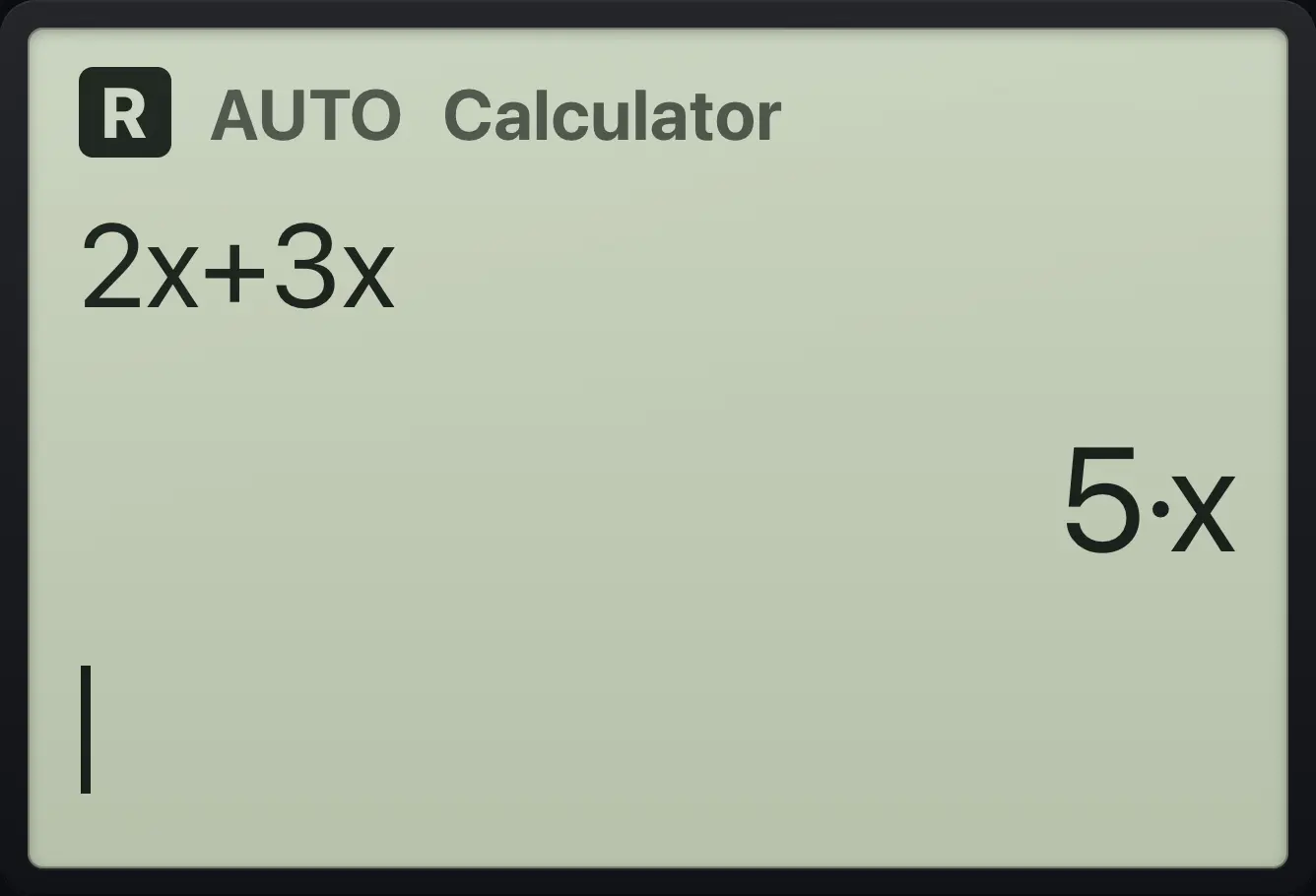
  1. Type 2x + 3x.

    2x+3xenter
Result of the example "Combine like terms" The display shows: 2x+3x / 5·x.
You should see5·x
Example 8.2

Cancel a common factor

  1. Type (x²−4) / (x²+4x+4).

    (x^2▶−4)÷(x^2▶+4x+4)enter
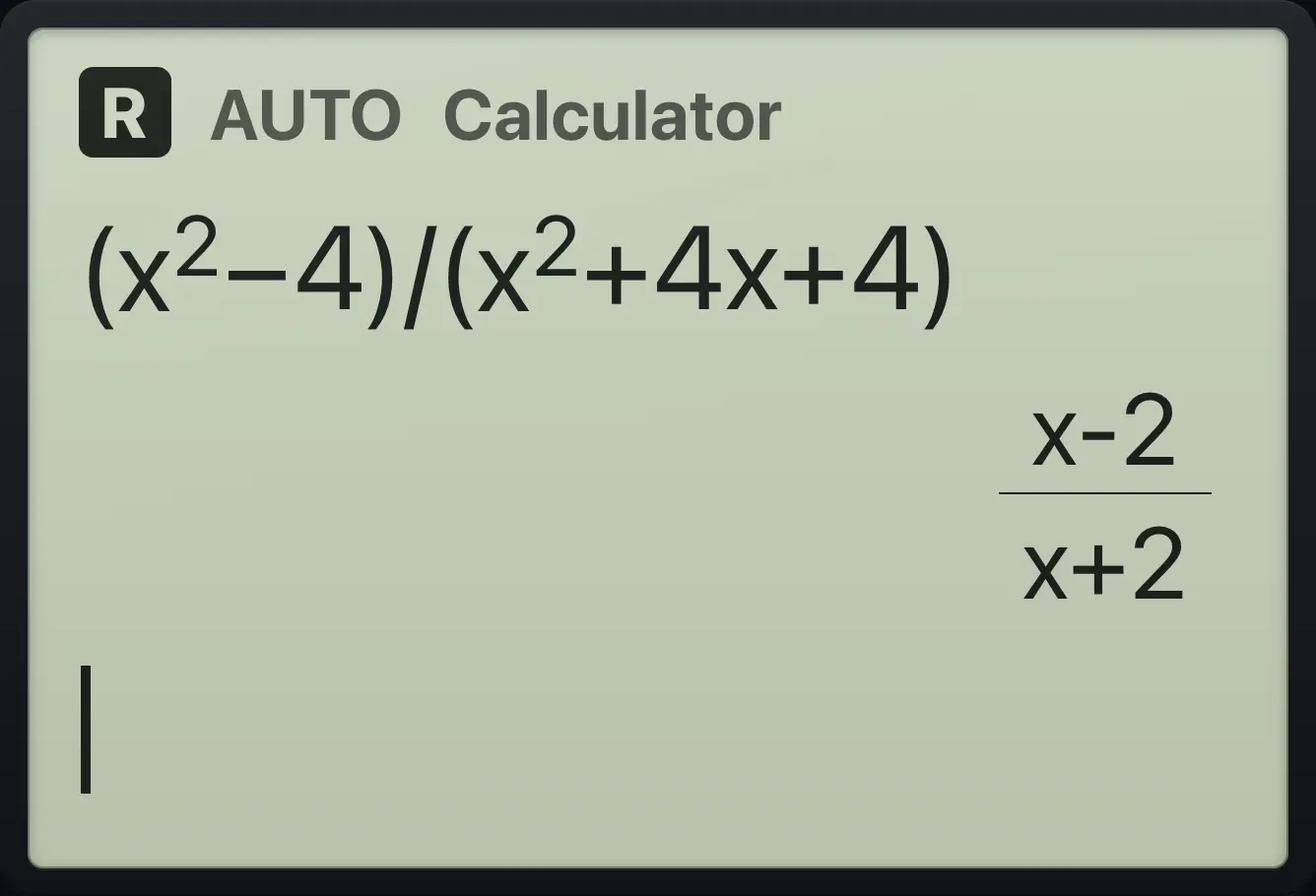
Result of the example "Cancel a common factor" The display shows: (x^2−4)/(x^2+4x+4) / (x-2)/(x+2).
You should see(x-2)/(x+2)
Example 8.3

Add powers

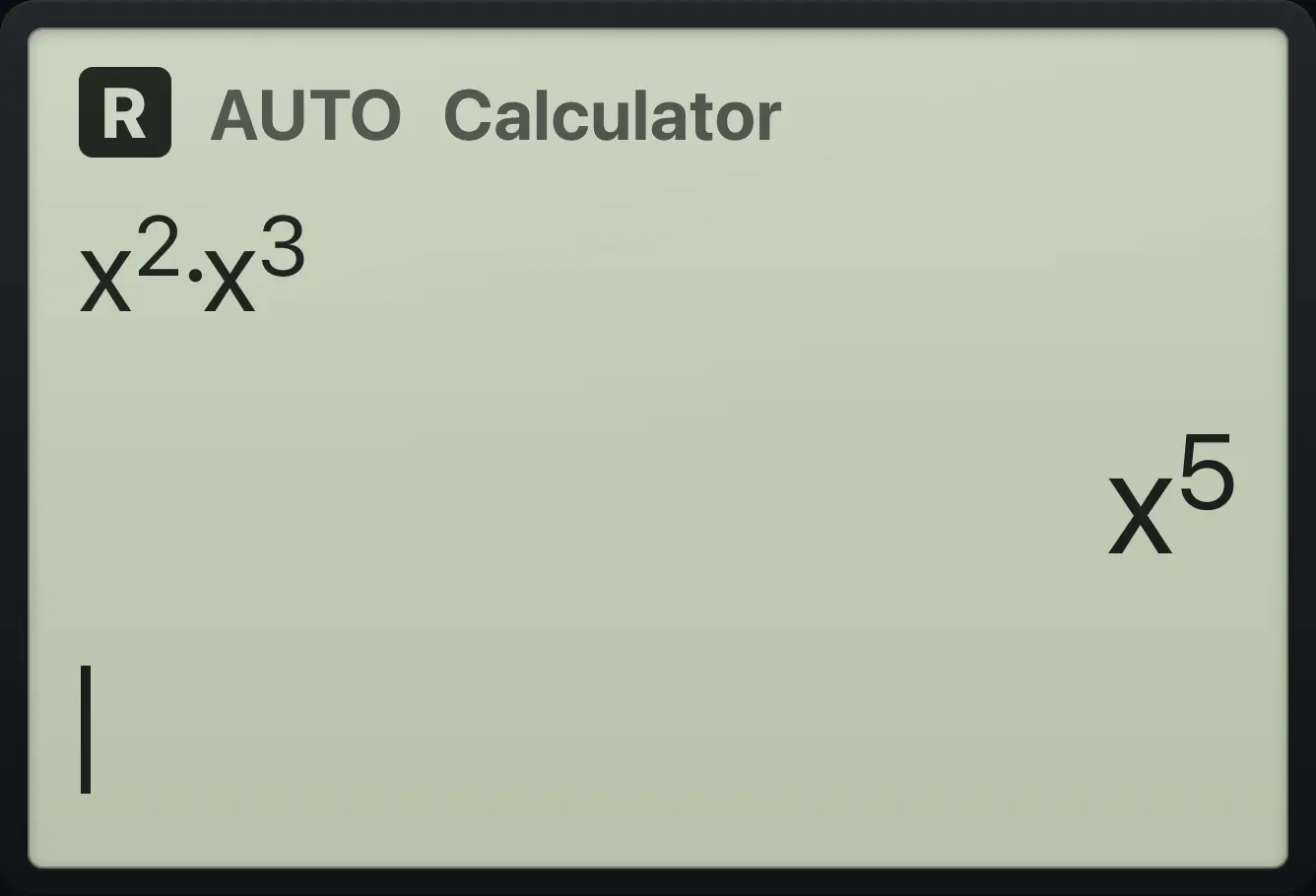
  1. Type x² × x³.

    x^2▶×x^3▶enter
Result of the example "Add powers" The display shows: x^2·x^3 / x^5.
You should seex^5
Example 8.4

Pythagorean identity

sin⁡2x+cos⁡2x=1\sin^{2}x+\cos^{2}x=1
  1. Type sin(x)² + cos(x)².

    sin(x)^2▶+cos(x)^2▶enter
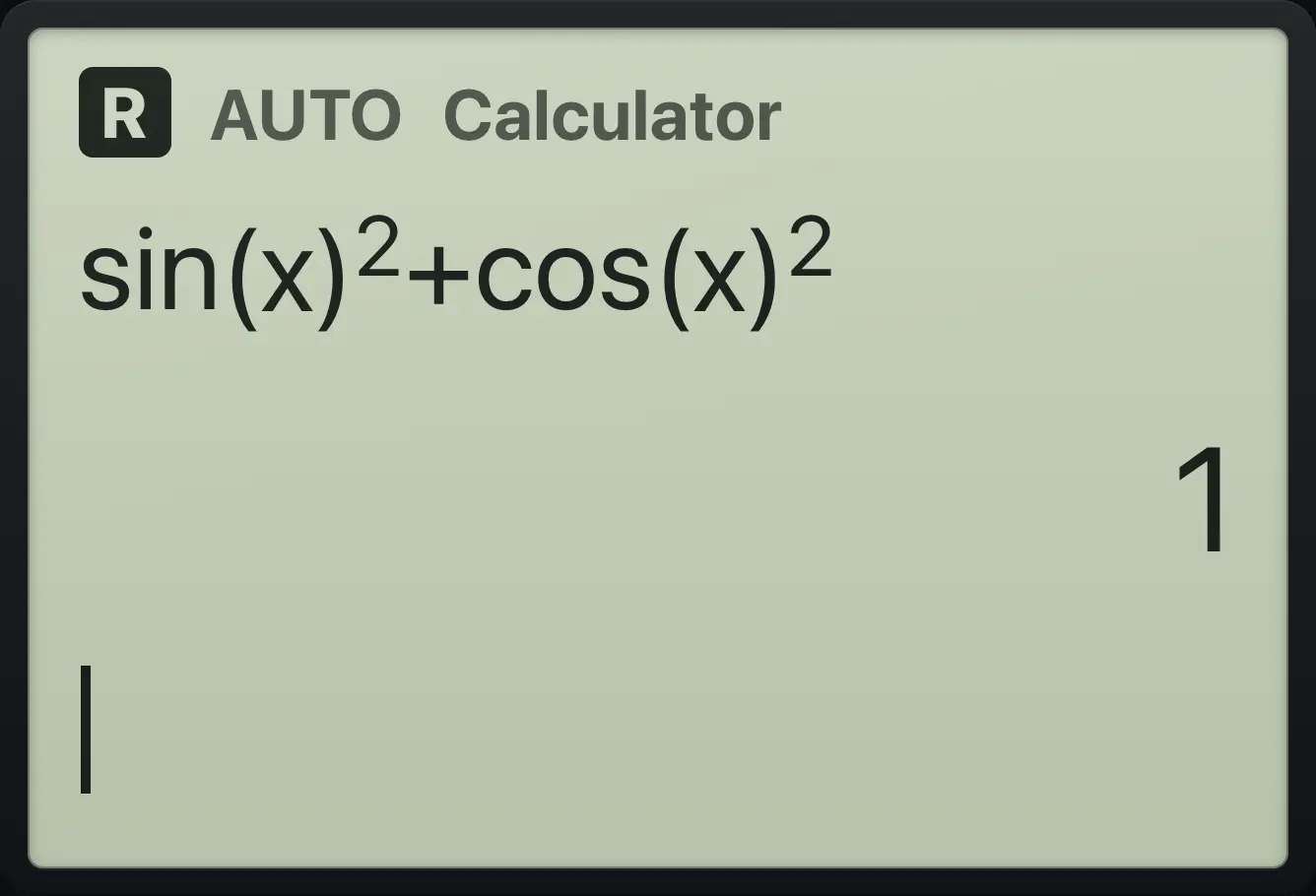
Result of the example "Pythagorean identity" The display shows: sin(x)^2+cos(x)^2 / 1.
You should see1
Example 8.5

Add fractions with letters

  1. Type x/2 + x/3 using the fraction template.

    /x▼2▶+/x▼3▶enter
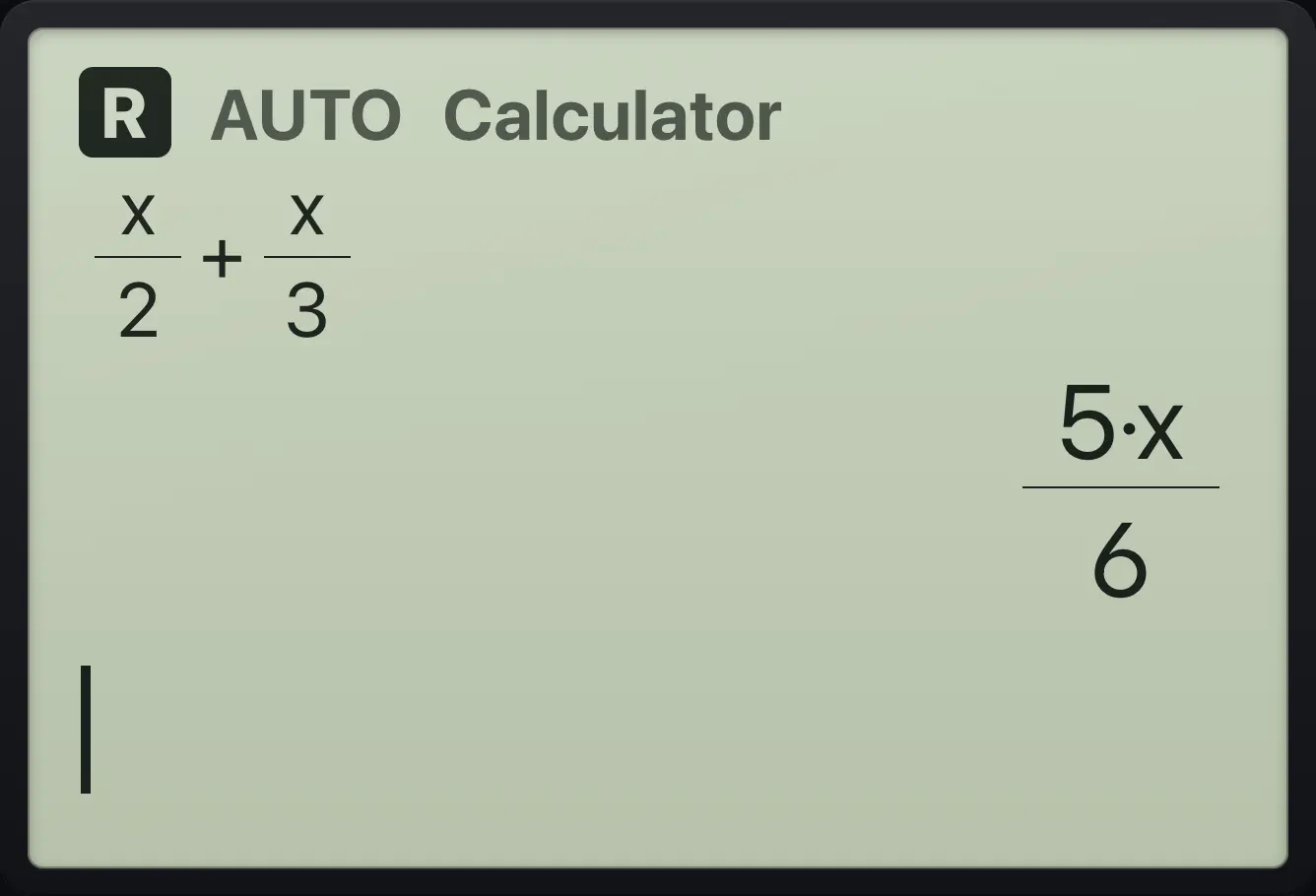
Result of the example "Add fractions with letters" The display shows: x/2+x/3 / 5·x/6.
You should see5·x/6

8.2Expand brackets#

expand( multiplies brackets out. You find it in the Algebra menu (3, 3).

(x+1)3=x3+3x2+3x+1(x+1)^3=x^3+3x^2+3x+1
The binomial cube.
Example 8.6

Expand a cube

  1. Type expand((x+1)^3).

    expand((x+1)^3▶)enter
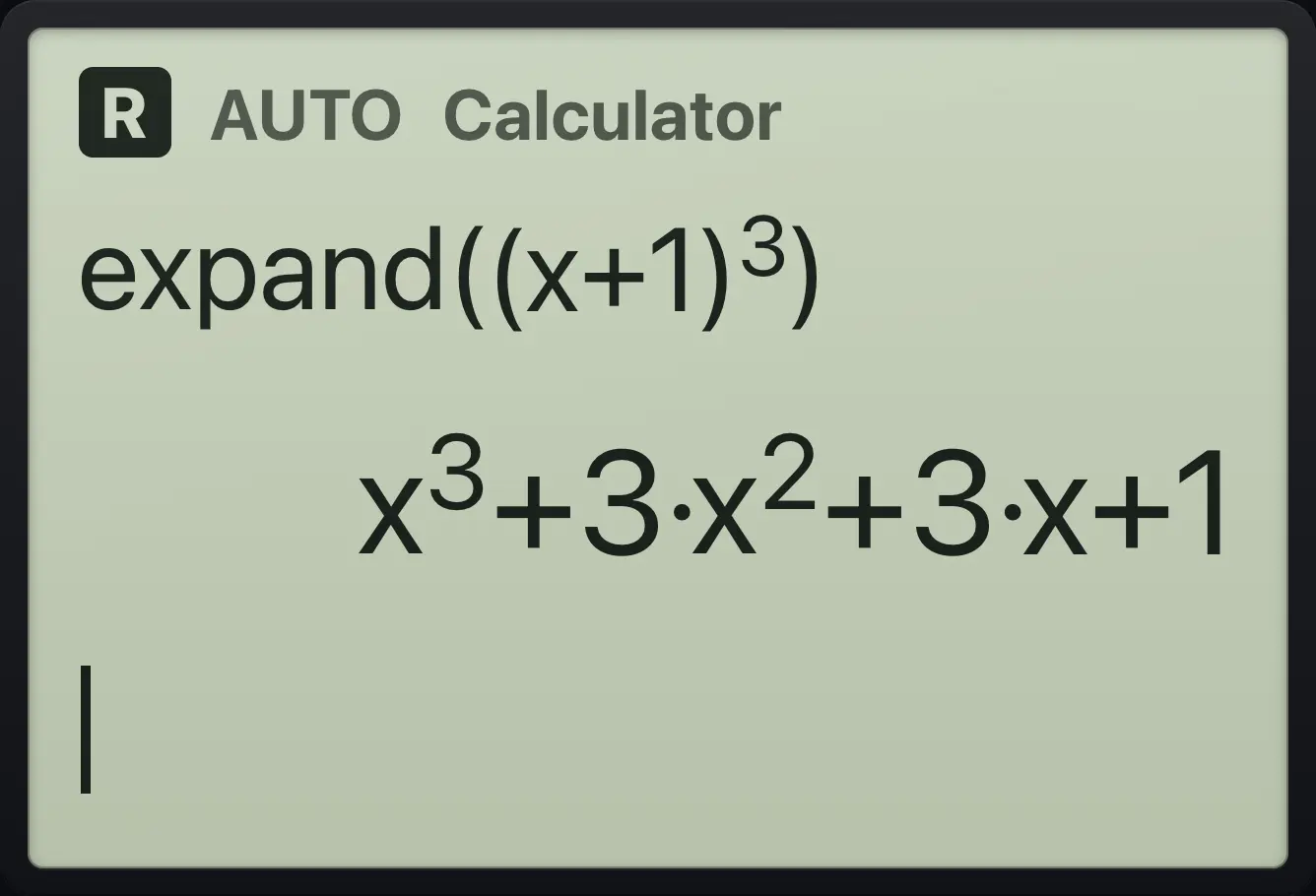
Result of the example "Expand a cube" The display shows: expand((x+1)^3) / x^3+3·x^2+3·x+1.
You should seex^3+3·x^2+3·x+1
Example 8.7

Expand a product

  1. Type expand((2x−3)(x+4)).

    expand((2x−3)(x+4))enter
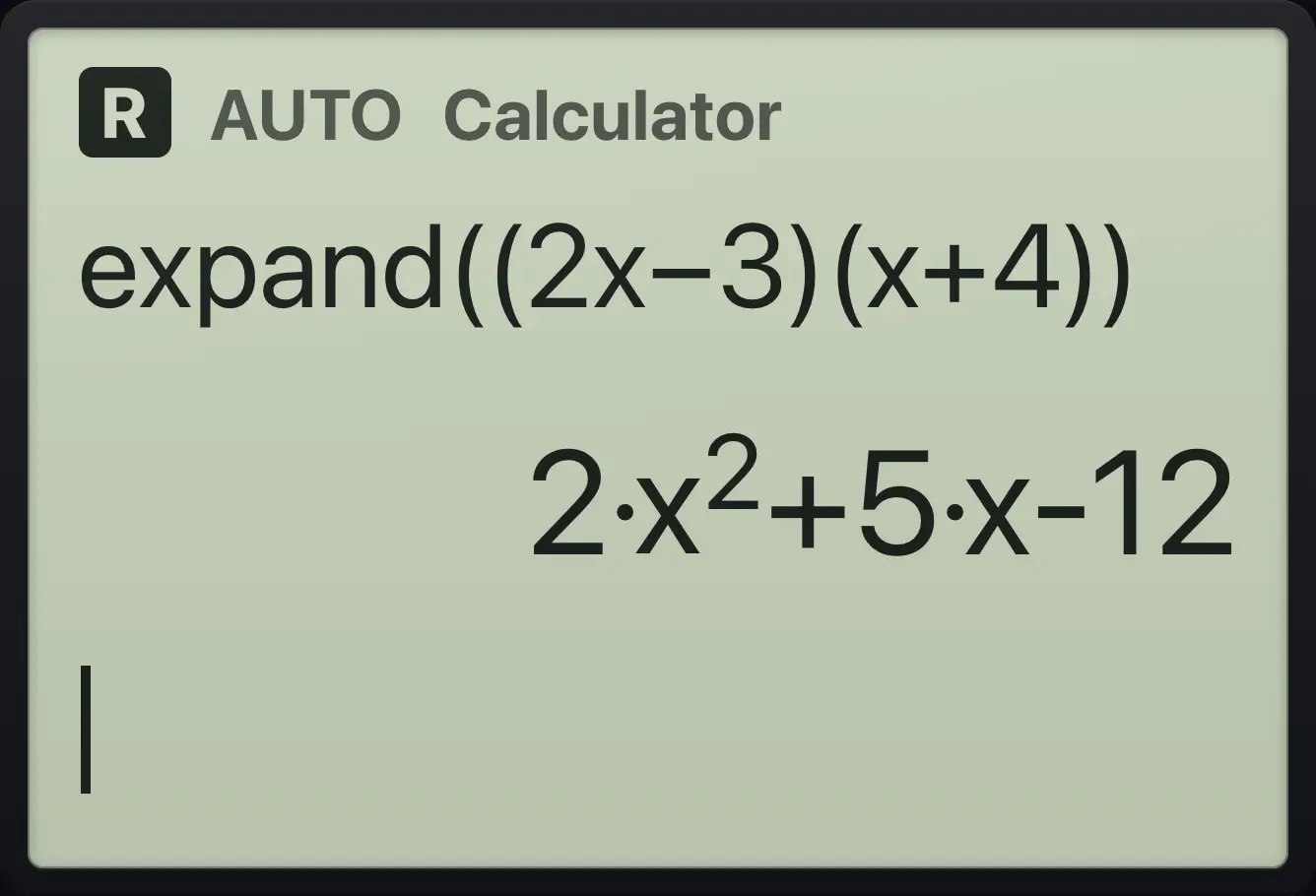
Result of the example "Expand a product" The display shows: expand((2x−3)(x+4)) / 2·x^2+5·x-12.
You should see2·x^2+5·x-12
Example 8.8

Expand with two letters

  1. Type expand((x+y)²).

    expand((x+y)^2▶)enter
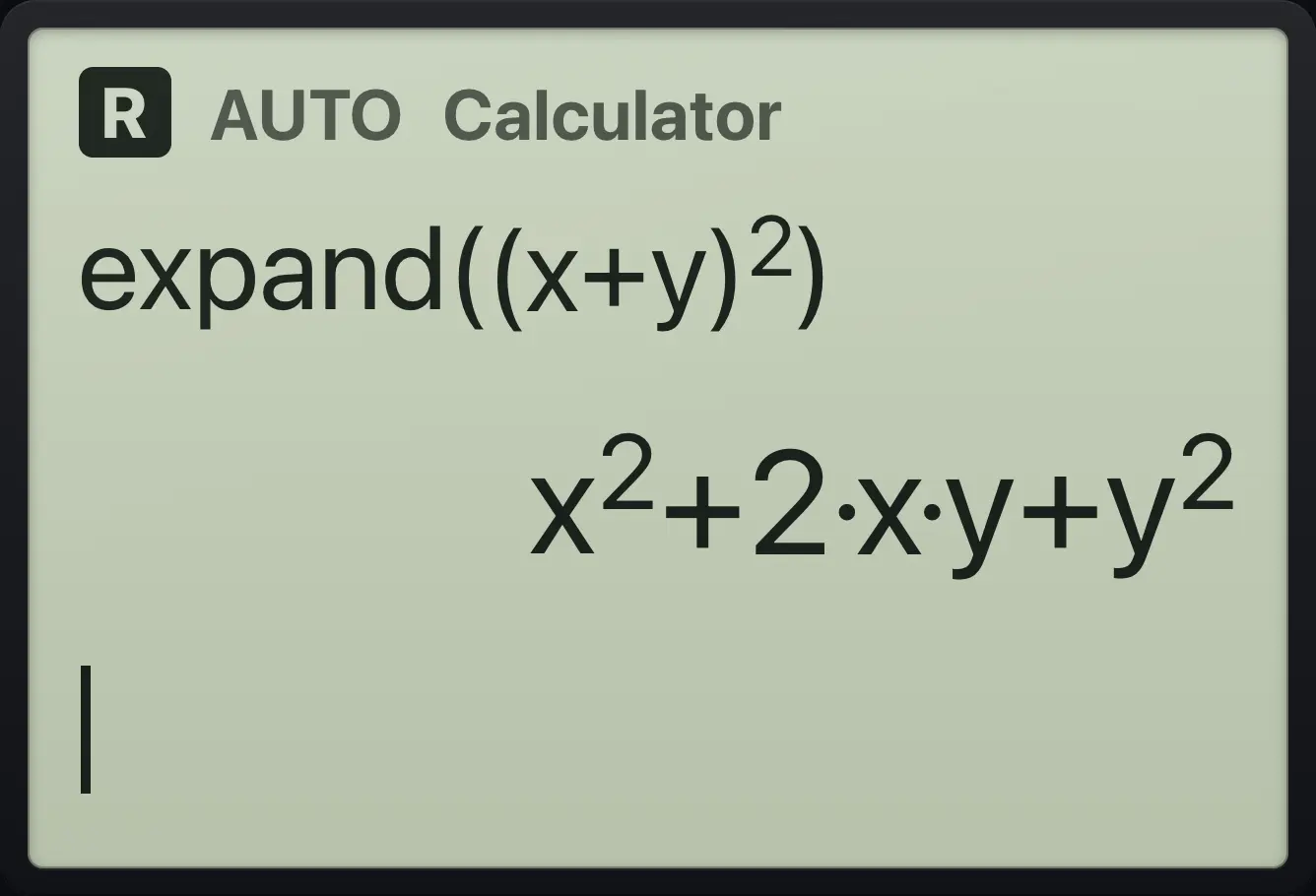
Result of the example "Expand with two letters" The display shows: expand((x+y)^2) / x^2+2·x·y+y^2.
You should seex^2+2·x·y+y^2
Example 8.9

A difference of squares of brackets

  1. Type expand((x+1)²−(x−1)²).

    expand((x+1)^2▶−(x−1)^2▶)enter
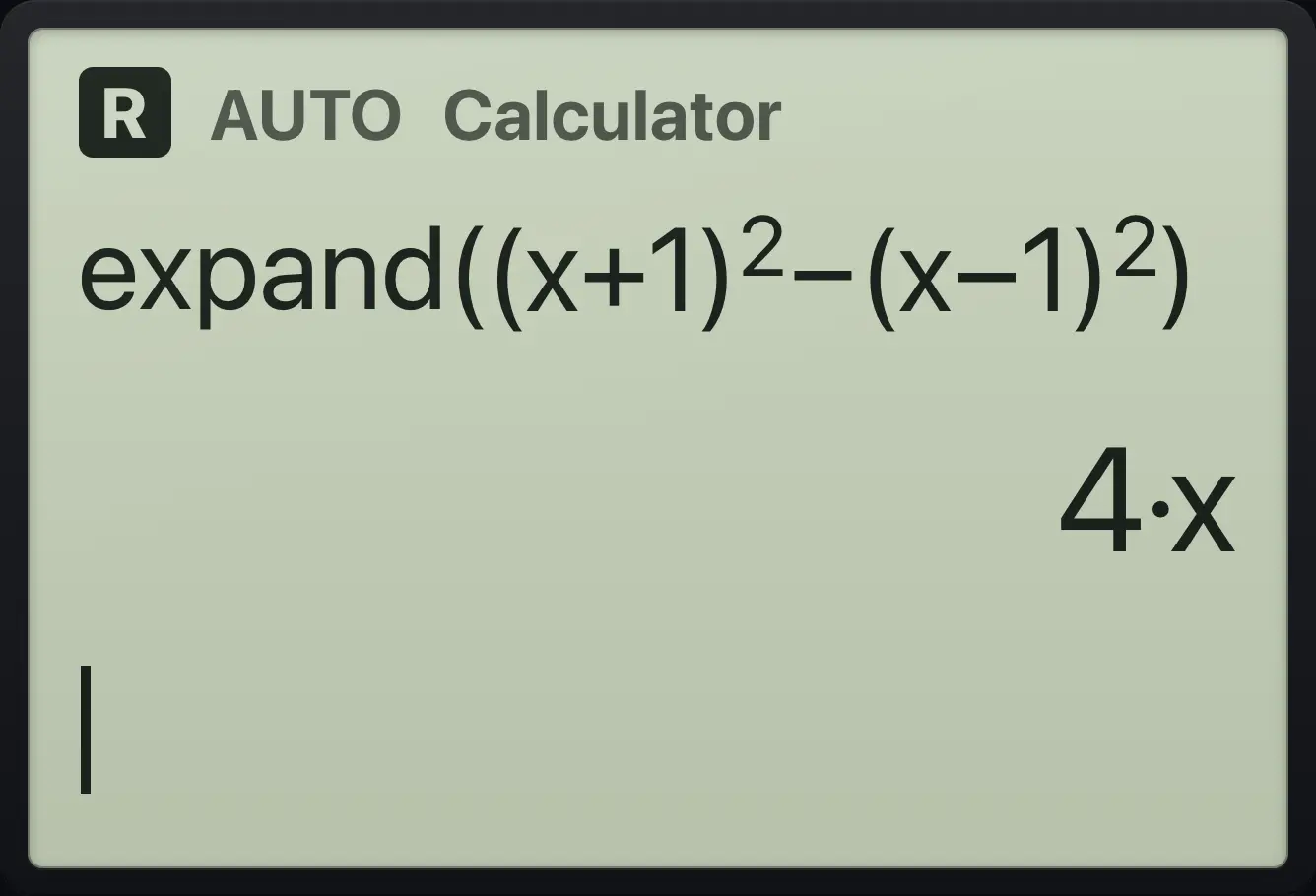
Result of the example "A difference of squares of brackets" The display shows: expand((x+1)^2−(x−1)^2) / 4·x.
You should see4·x

8.3Factor polynomials and numbers#

factor( breaks a polynomial into factors over the rationals, and a whole number into primes. The result is exact; if nothing factors, you get the same expression back. cFactor( also uses complex numbers.

Example 8.10

Factor a quadratic

x2−5x+6=(x−2)(x−3)x^{2}-5x+6=(x-2)(x-3)
  1. Type factor(x²−5x+6).

    factor(x^2▶−5x+6)enter
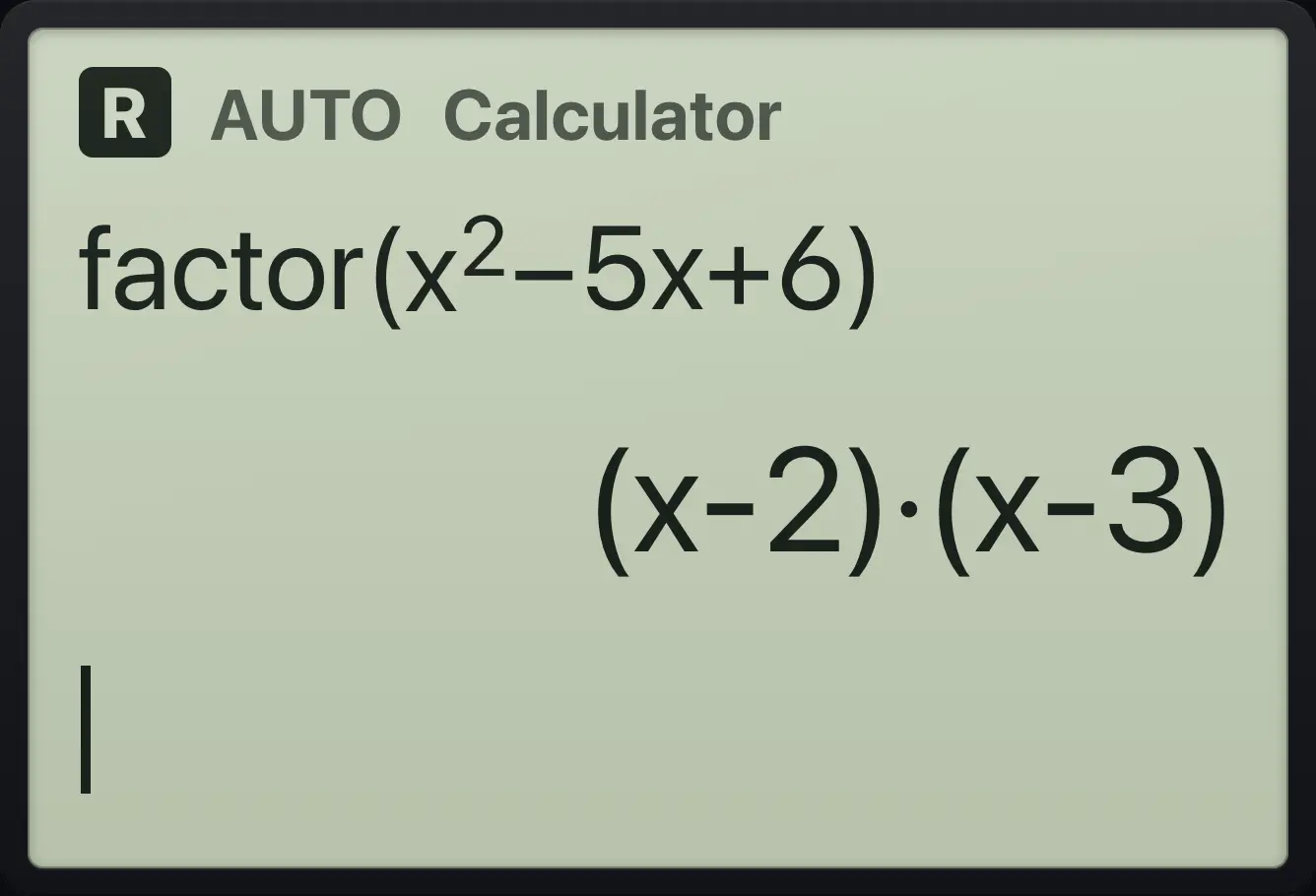
Result of the example "Factor a quadratic" The display shows: factor(x^2−5x+6) / (x-2)·(x-3).
You should see(x-2)·(x-3)
Example 8.11

Factor a fourth power

  1. Type factor(x⁴−1).

    factor(x^4▶−1)enter
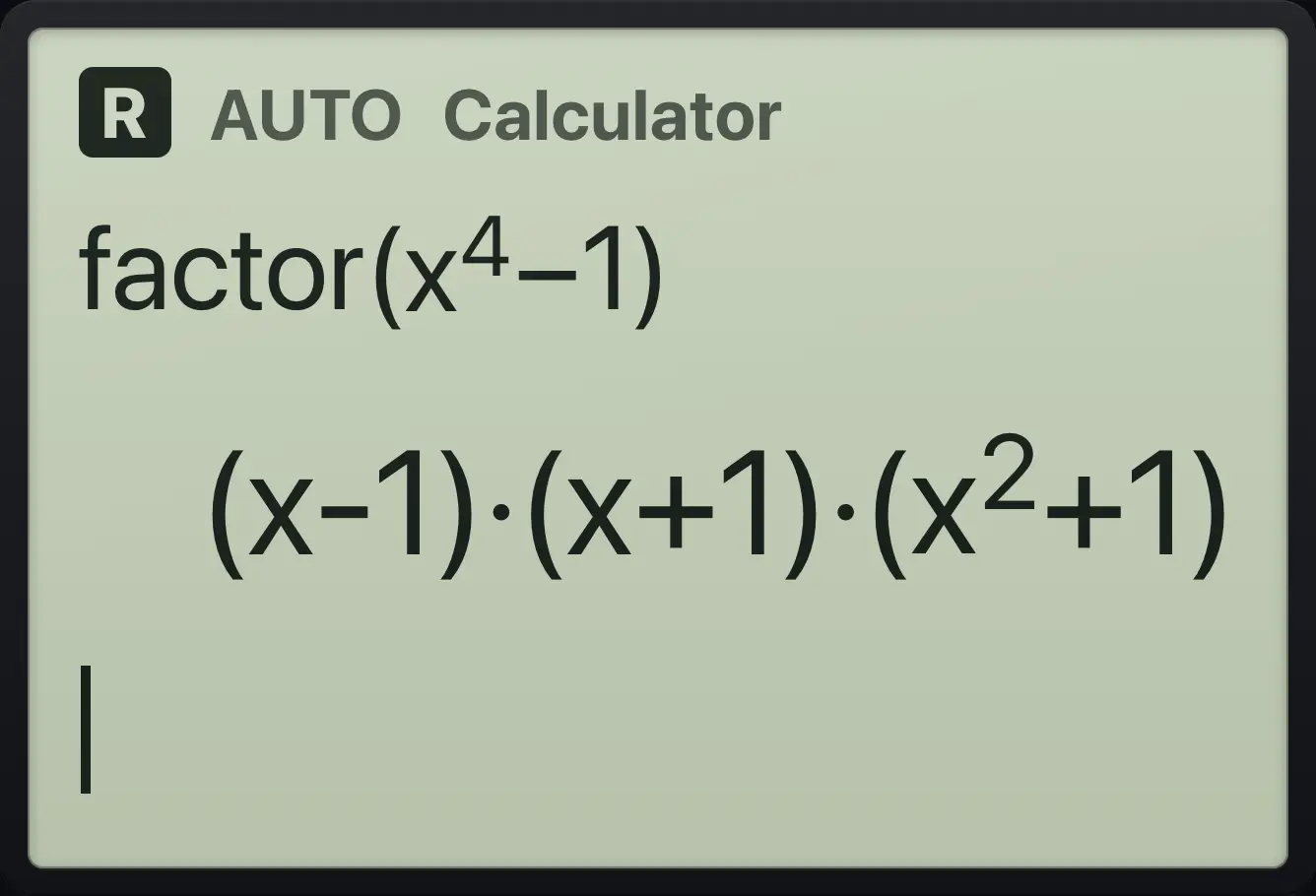
Result of the example "Factor a fourth power" The display shows: factor(x^4−1) / (x-1)·(x+1)·(x^2+1).
You should see(x-1)·(x+1)·(x^2+1)
Example 8.12

Sum of cubes

  1. Type factor(x³+1).

    factor(x^3▶+1)enter
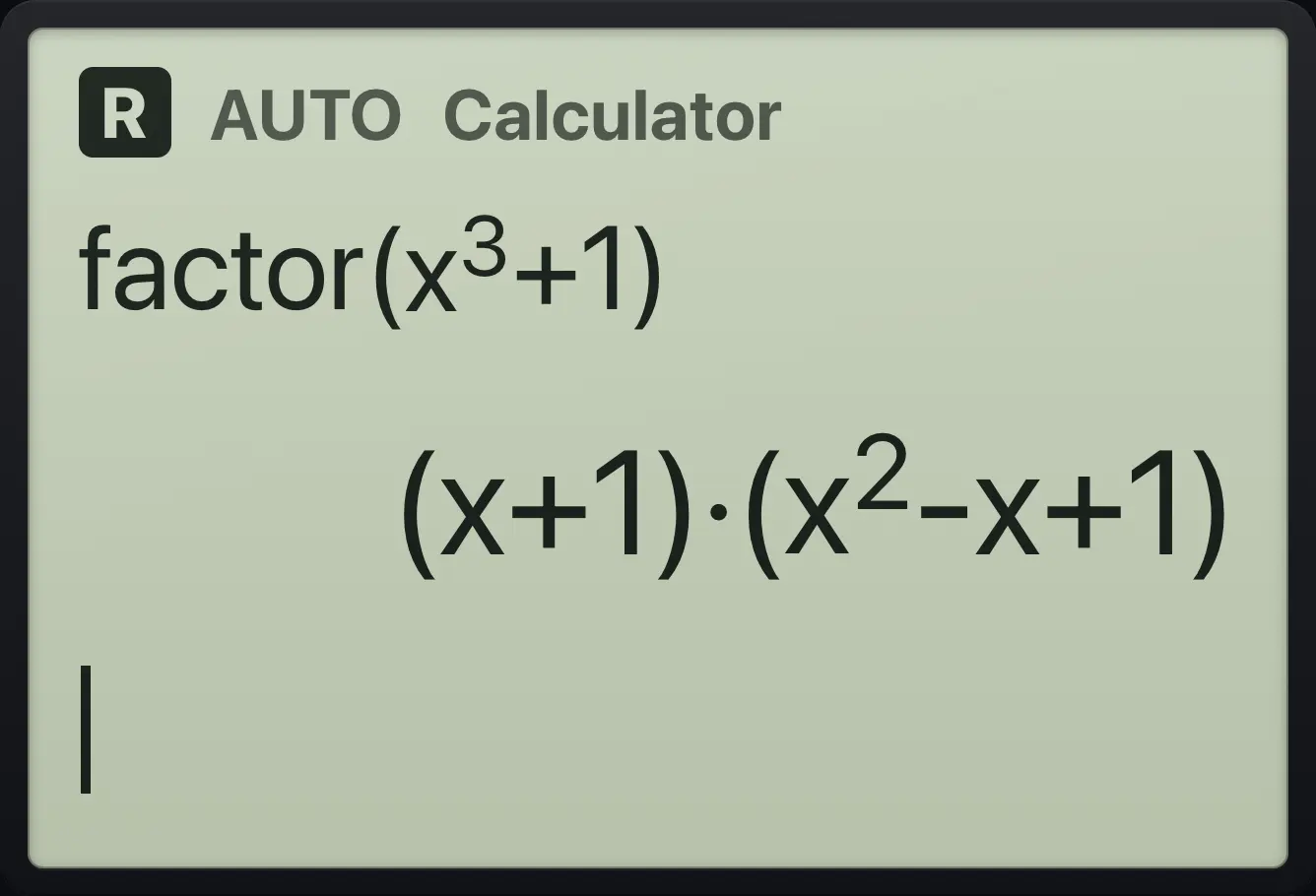
Result of the example "Sum of cubes" The display shows: factor(x^3+1) / (x+1)·(x^2-x+1).
You should see(x+1)·(x^2-x+1)
Example 8.13

A leading coefficient

  1. Type factor(6x²+5x+1).

    factor(6x^2▶+5x+1)enter
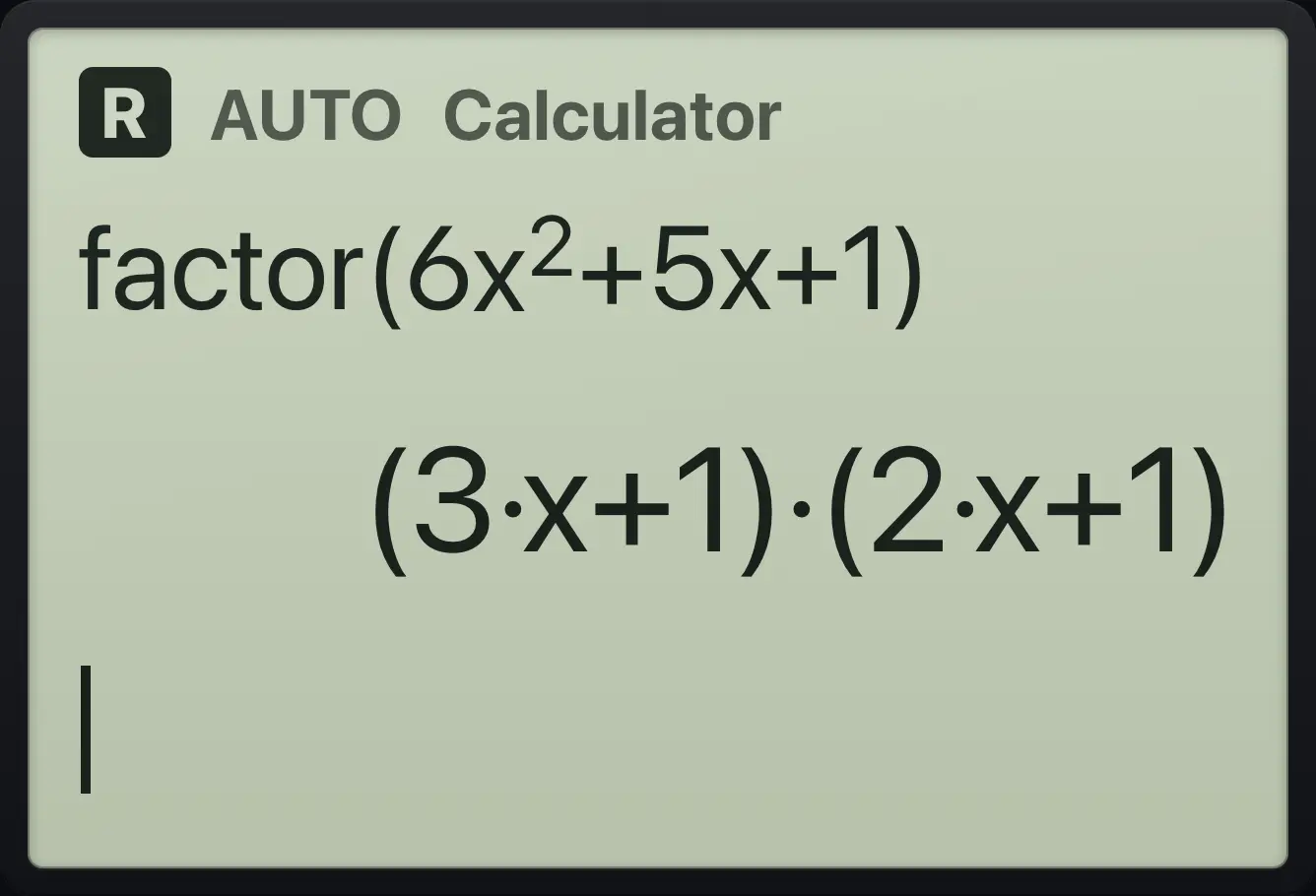
Result of the example "A leading coefficient" The display shows: factor(6x^2+5x+1) / (3·x+1)·(2·x+1).
You should see(3·x+1)·(2·x+1)
Example 8.14

Difference of squares

  1. Type factor(x²−y²).

    factor(x^2▶−y^2▶)enter
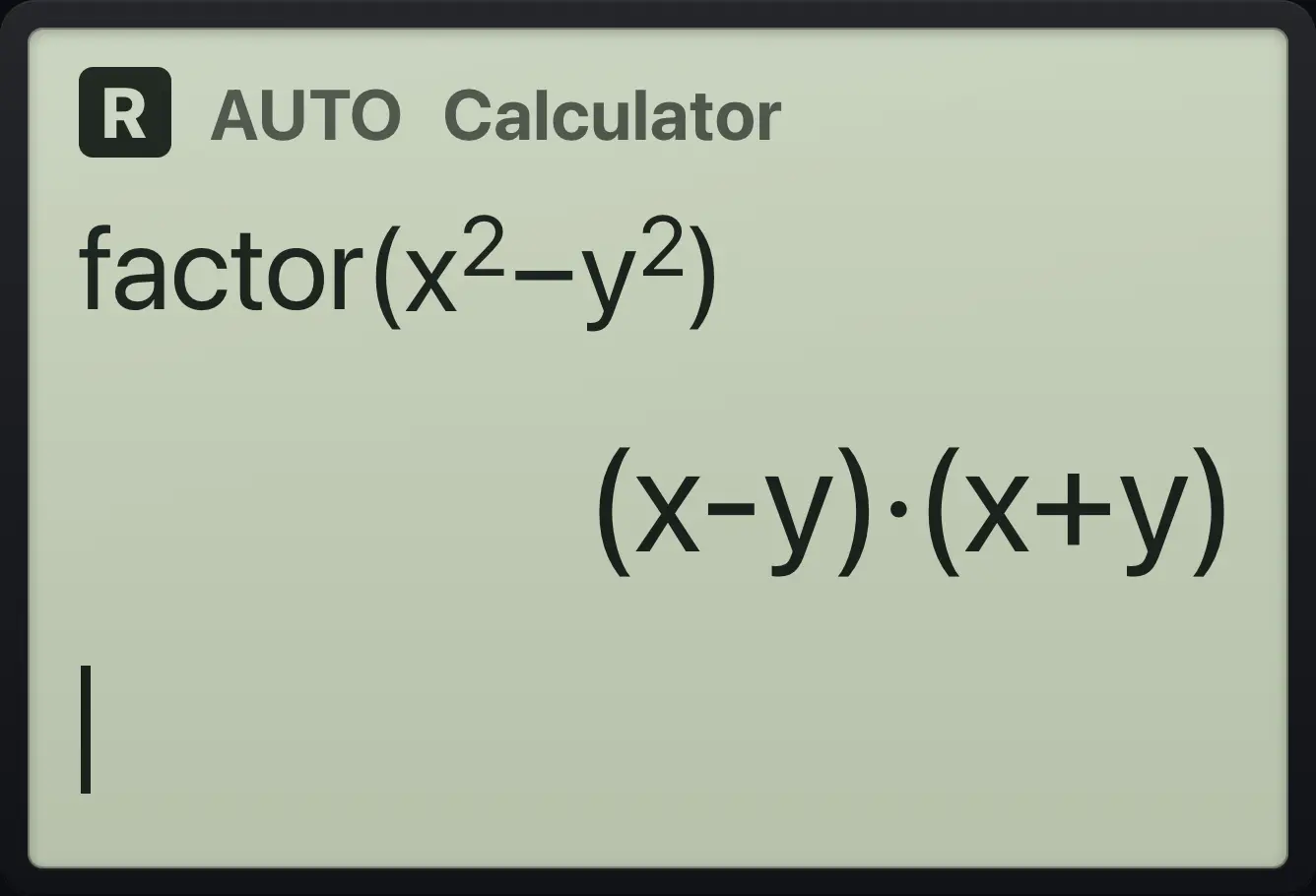
Result of the example "Difference of squares" The display shows: factor(x^2−y^2) / (x-y)·(x+y).
You should see(x-y)·(x+y)
Example 8.15

Factor with complex numbers

  1. Type cFactor(x²+1).

    cfactor(x^2▶+1)enter
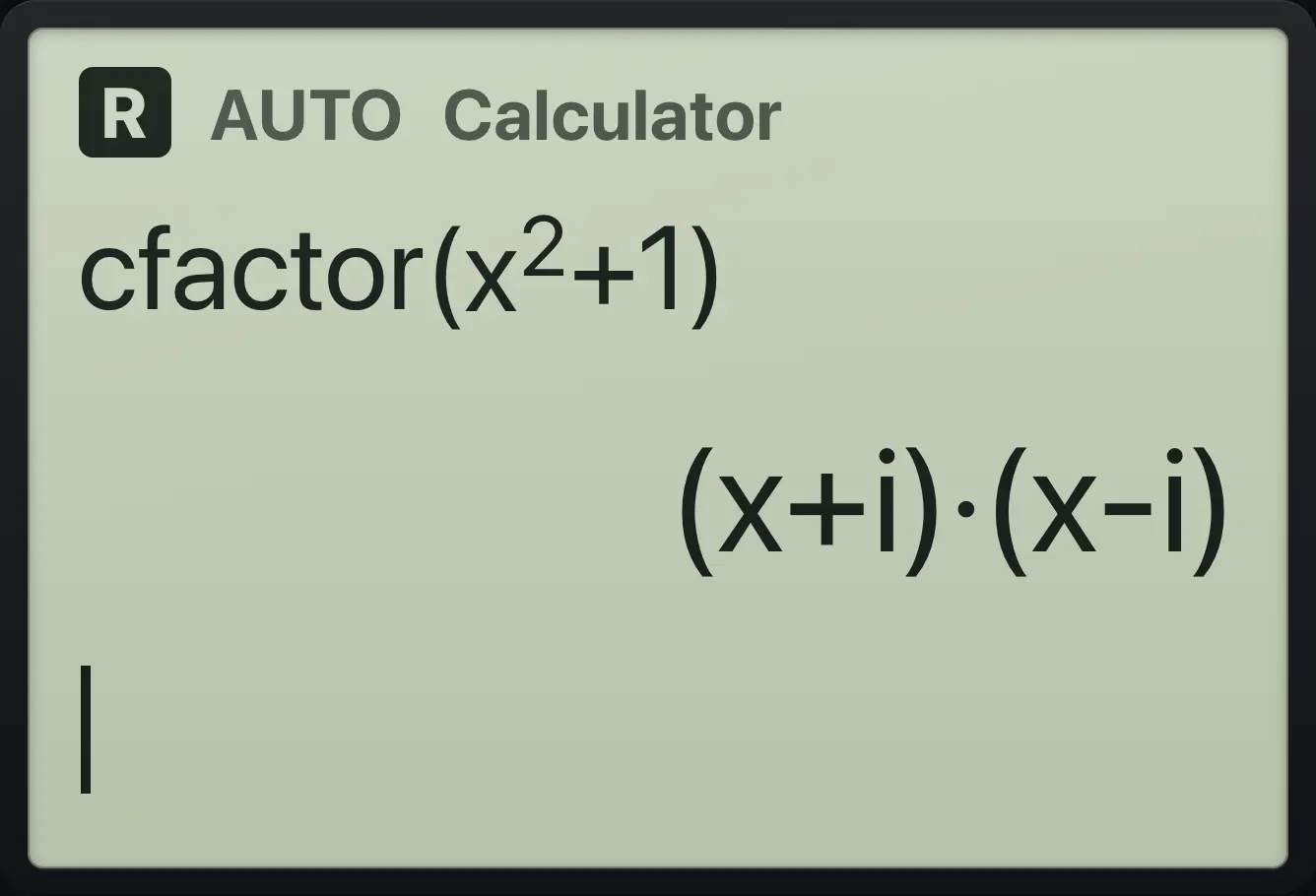
Result of the example "Factor with complex numbers" The display shows: cfactor(x^2+1) / (x+i)·(x-i).
You should see(x+i)·(x-i)

8.4Common denominators and parts of a fraction#

Example 8.16

Common denominator

1x+1y=x+yxy\frac{1}{x}+\frac{1}{y}=\frac{x+y}{xy}
  1. Type comDenom(1/x + 1/y).

    comdenom(1÷x+1÷y)enter
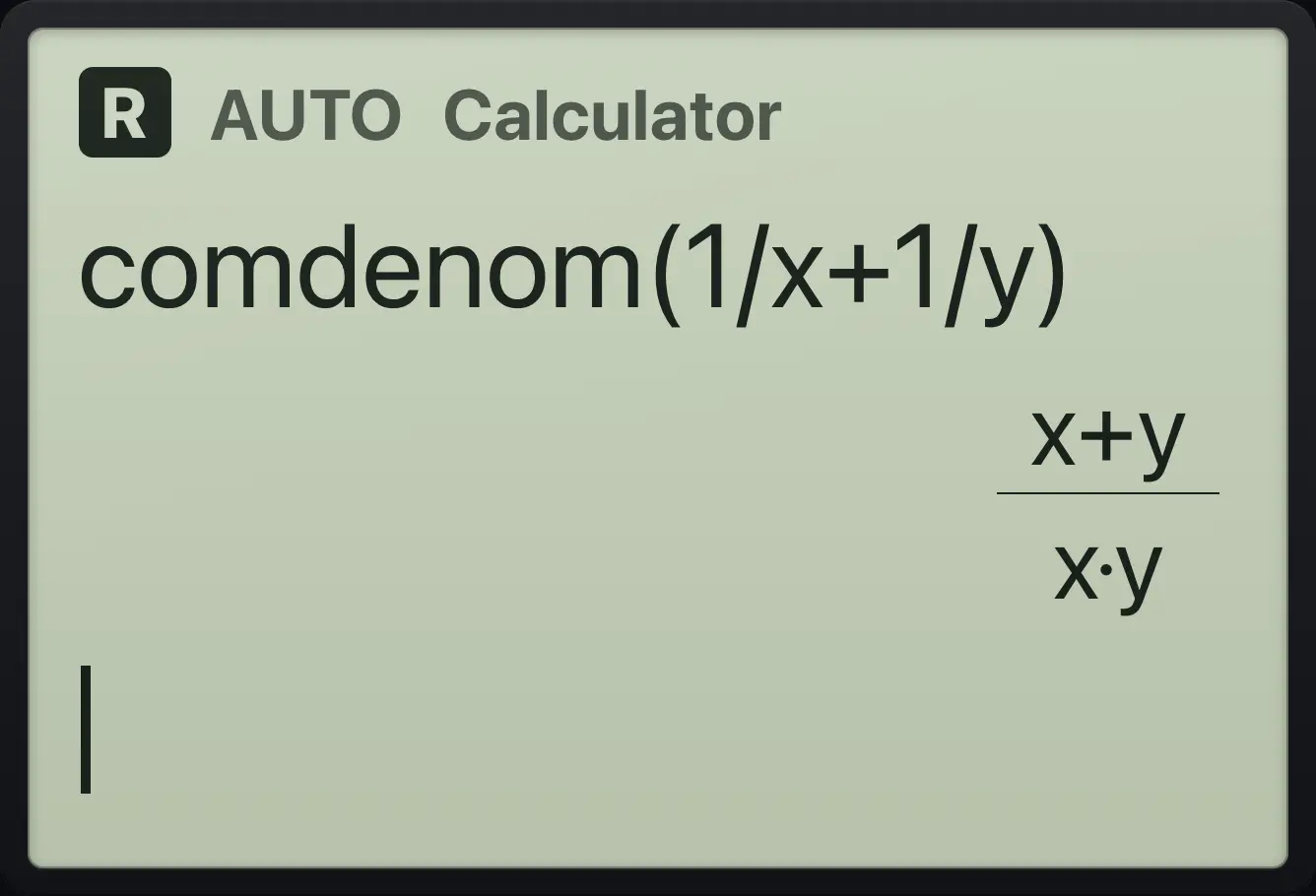
Result of the example "Common denominator" The display shows: comdenom(1/x+1/y) / (x+y)/(x·y).
You should see(x+y)/(x·y)
Example 8.17

Numerator of a fraction

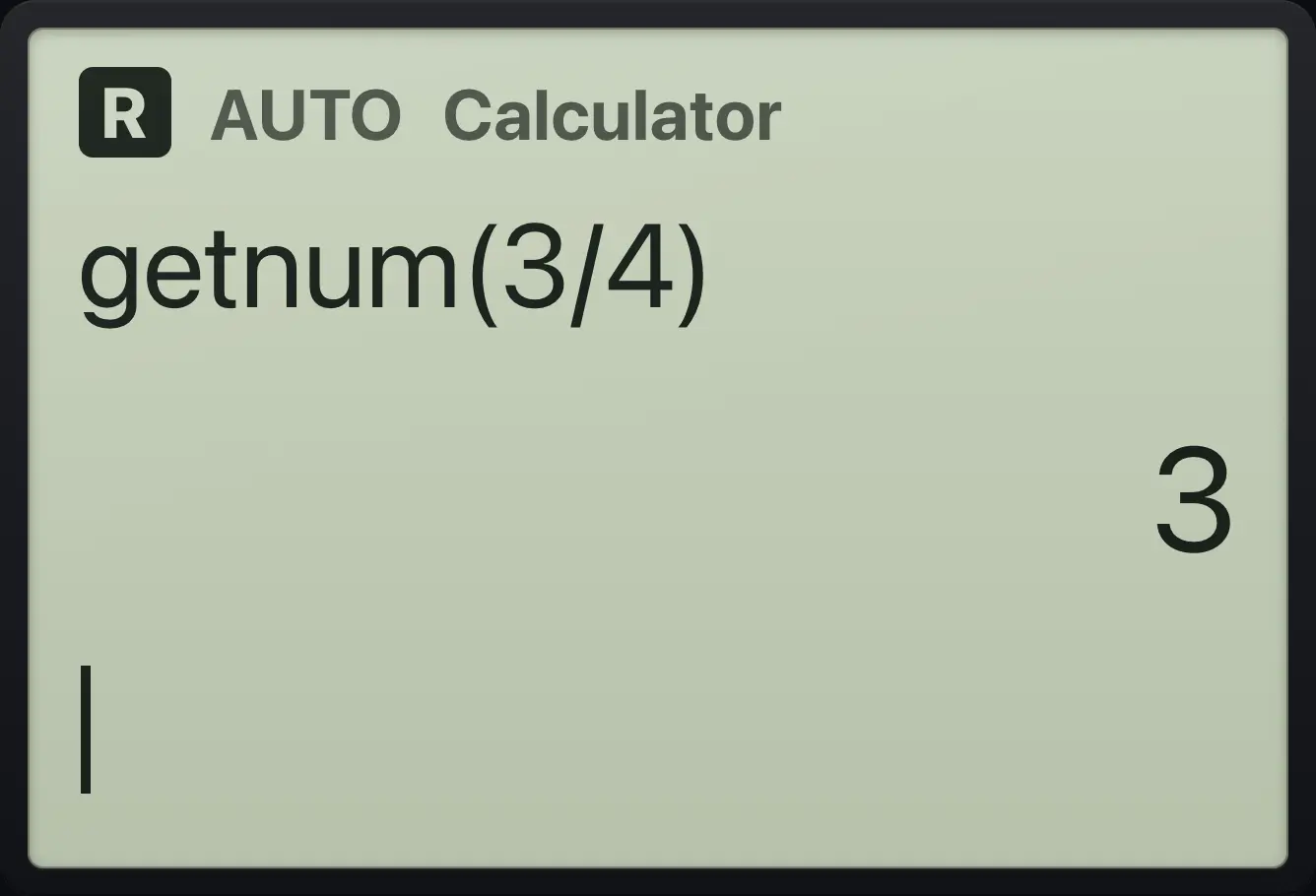
  1. Type getNum(3/4).

    getnum(3÷4)enter
Result of the example "Numerator of a fraction" The display shows: getnum(3/4) / 3.
You should see3
Example 8.18

Denominator of a fraction

  1. Type getDenom(3/4).

    getdenom(3÷4)enter
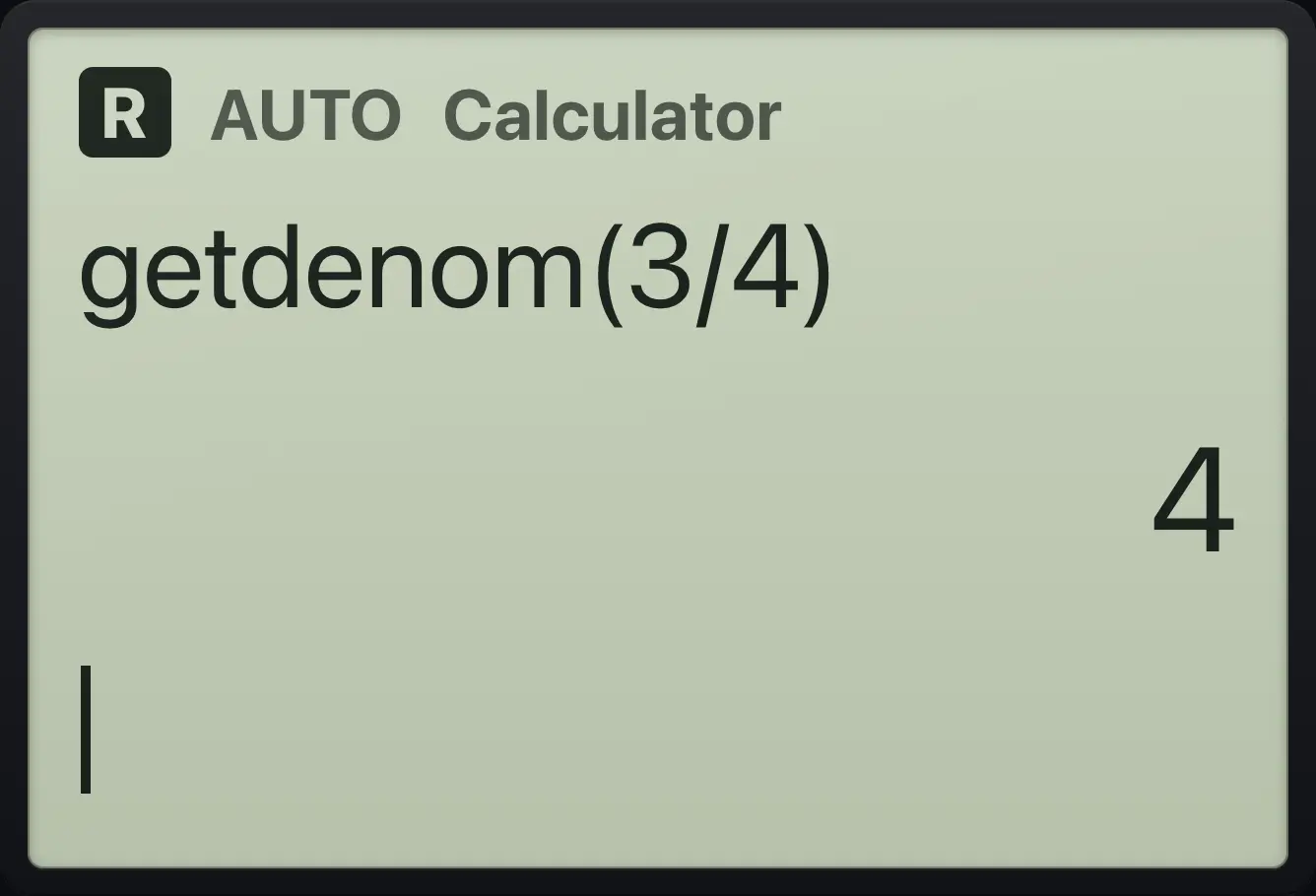
Result of the example "Denominator of a fraction" The display shows: getdenom(3/4) / 4.
You should see4
Example 8.19

Left side of an equation

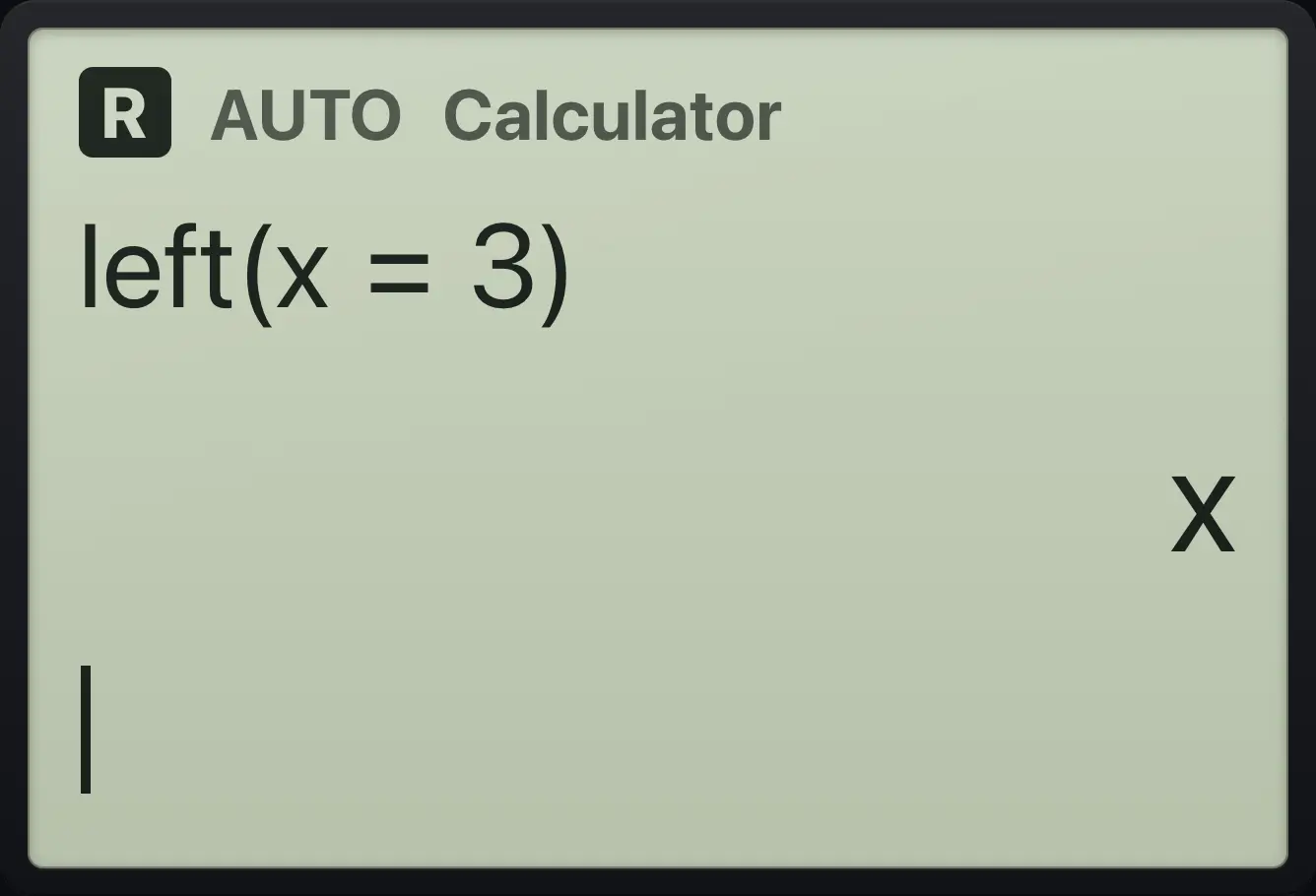
  1. Type left(x=3).

    left(x=3)enter
Result of the example "Left side of an equation" The display shows: left(x=3) / x.
You should seex
Example 8.20

Right side of an equation

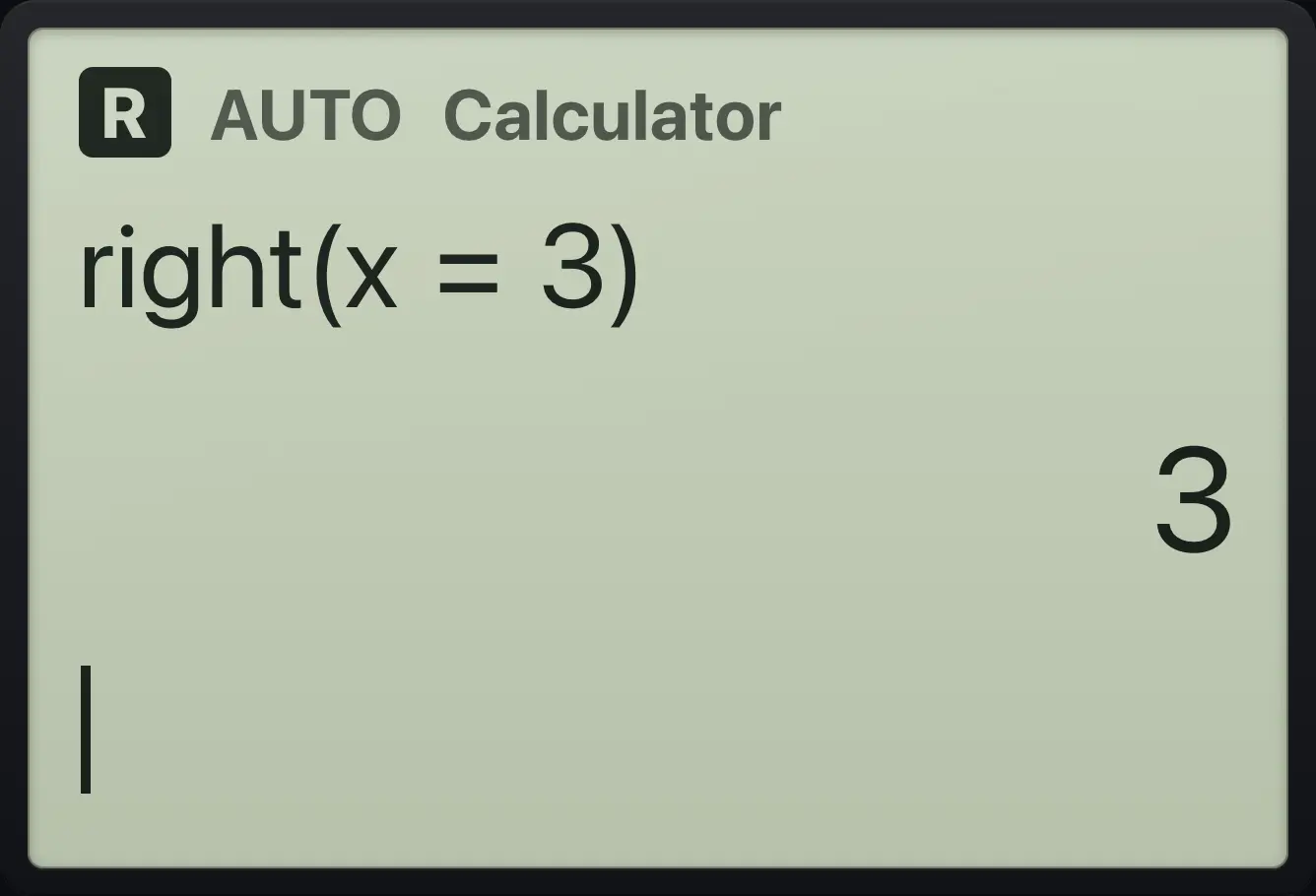
  1. Type right(x=3).

    right(x=3)enter
Result of the example "Right side of an equation" The display shows: right(x=3) / 3.
You should see3

8.5Polynomial division and coefficients#

These functions take a polynomial and the variable: polyQuotient(p, q, x), polyRemainder(p, q, x), polyGcd(p, q, x), polyDegree(p, x), polyCoeffs(p, x).

x3−1=(x−1)(x2+x+1)+0x^3-1=(x-1)(x^2+x+1)+0
Dividing x³−1 by x−1.
Example 8.21

Quotient

  1. Type polyQuotient(x³−1, x−1, x).

    polyquotient(x^3▶−1,x−1,x)enter
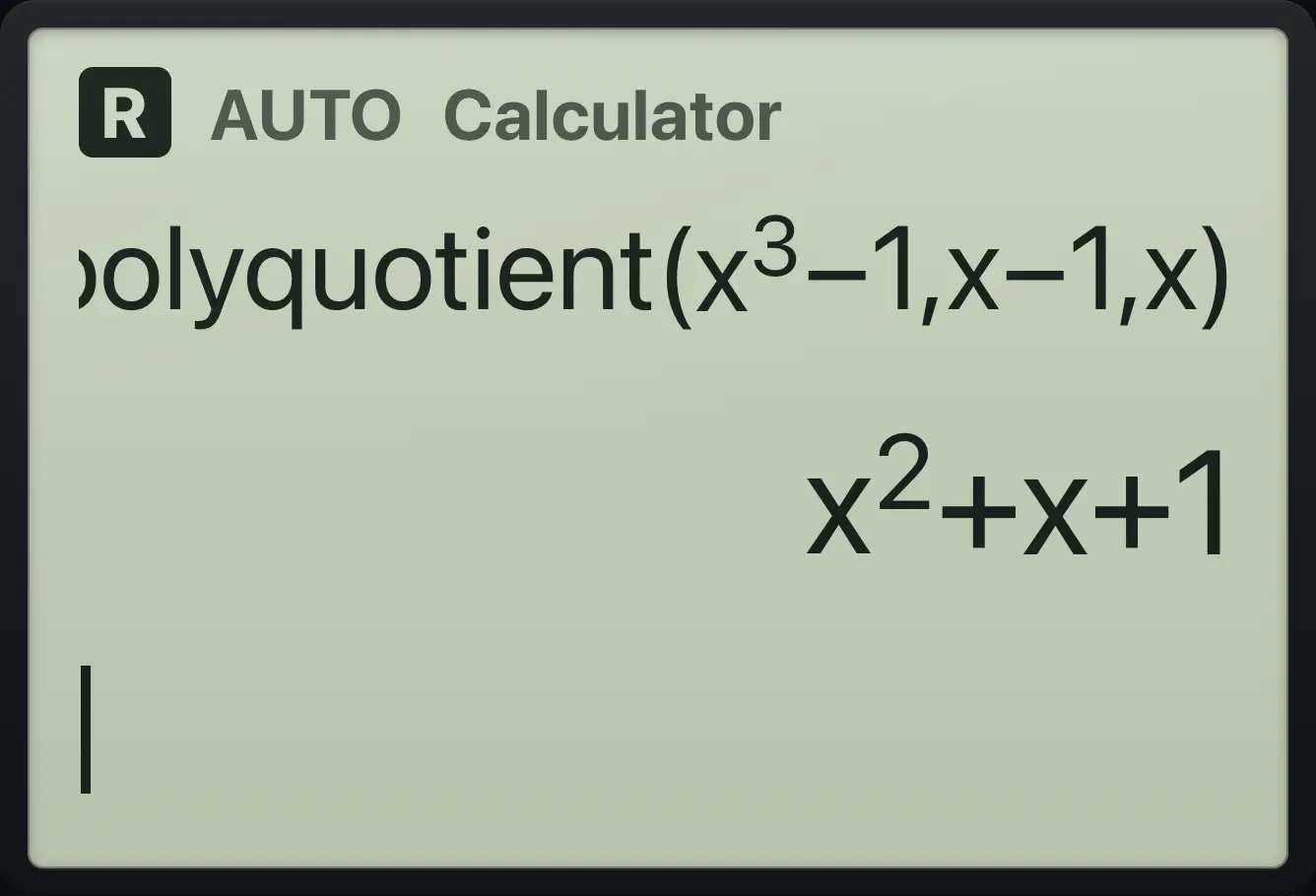
Result of the example "Quotient" The display shows: polyquotient(x^3−1,x−1,x) / x^2+x+1.
You should seex^2+x+1
Example 8.22

Remainder

  1. Type polyRemainder(x³+2, x−1, x).

    polyremainder(x^3▶+2,x−1,x)enter
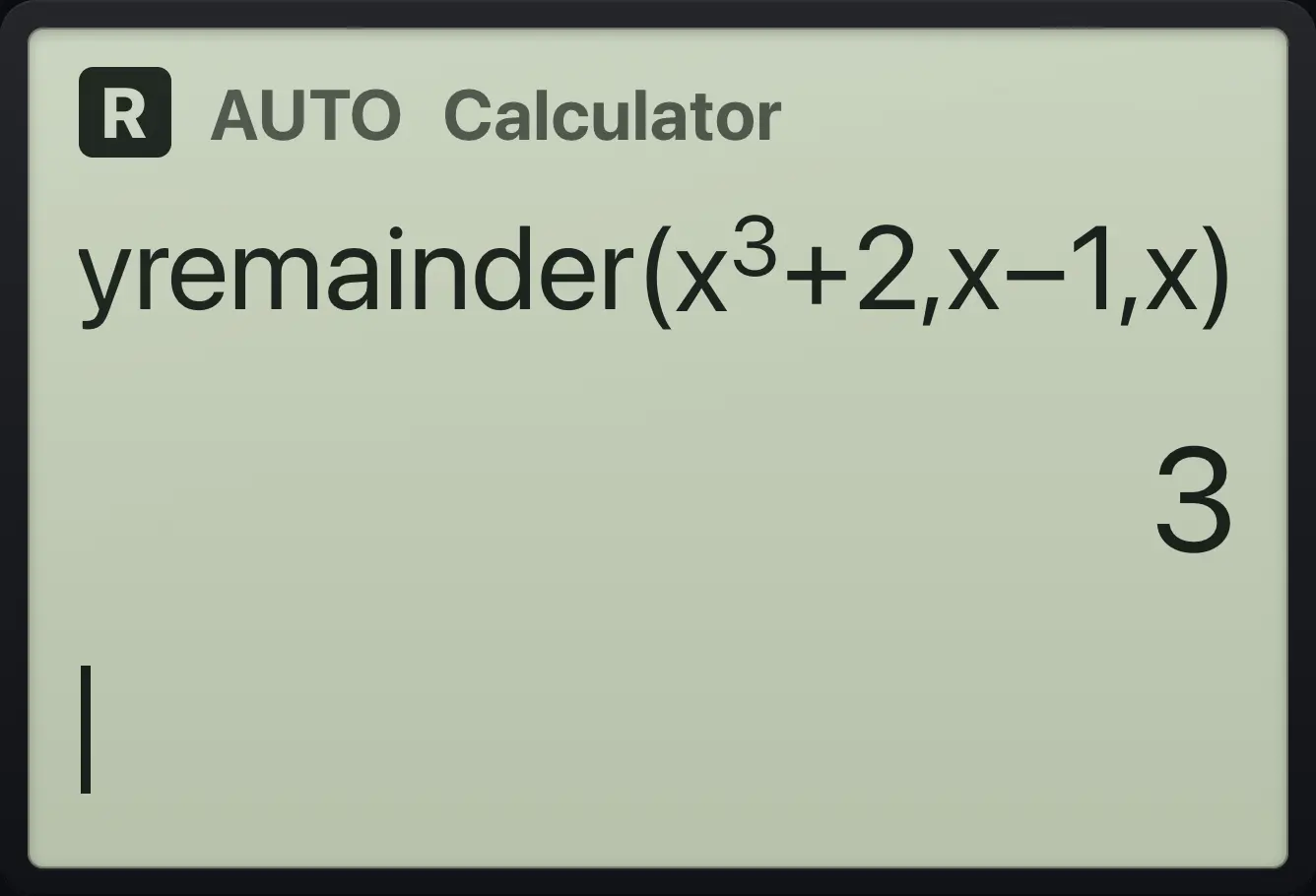
Result of the example "Remainder" The display shows: polyremainder(x^3+2,x−1,x) / 3.
You should see3
Example 8.23

Greatest common divisor

  1. Type polyGcd(x²−1, x²−x, x).

    polygcd(x^2▶−1,x^2▶−x,x)enter
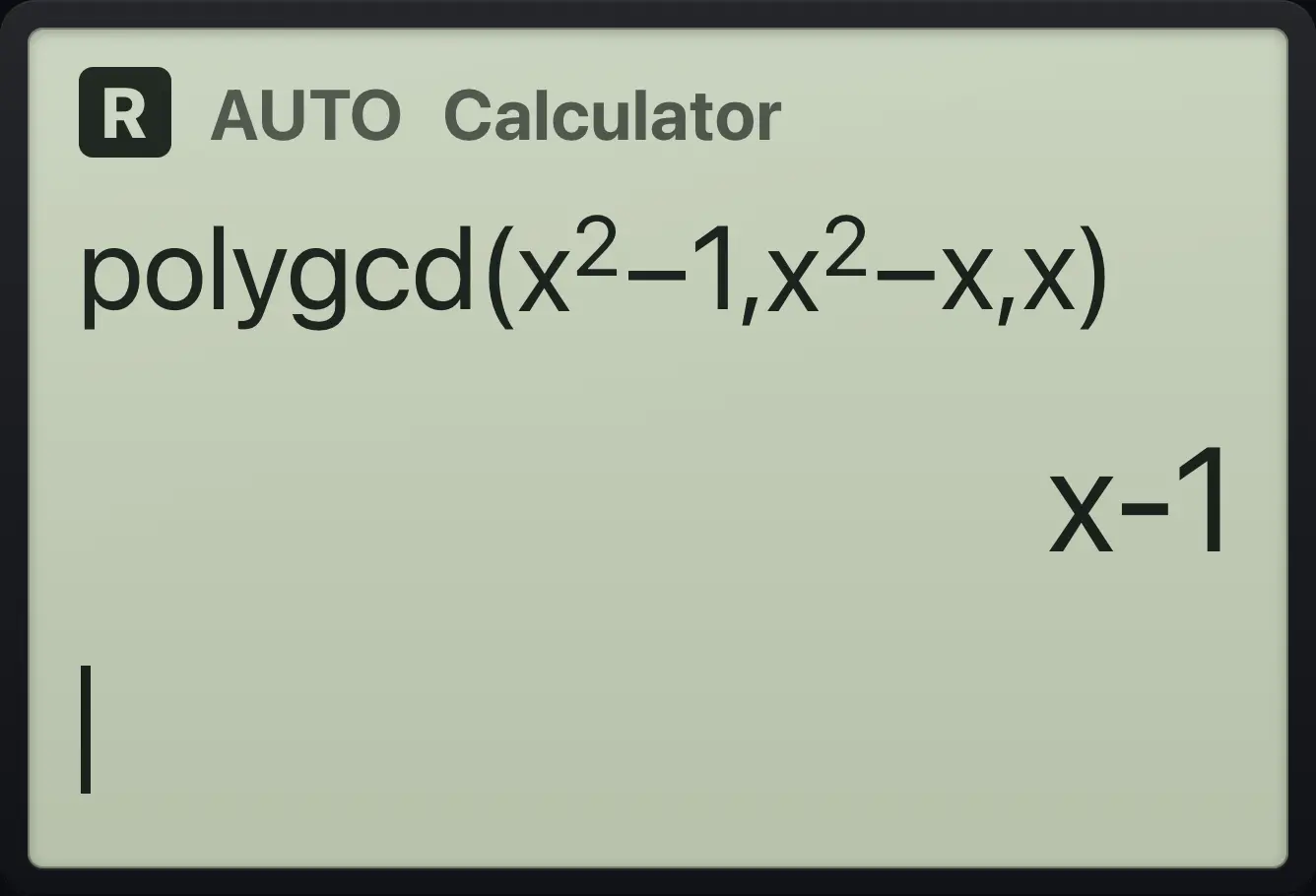
Result of the example "Greatest common divisor" The display shows: polygcd(x^2−1,x^2−x,x) / x-1.
You should seex-1
Example 8.24

Degree

  1. Type polyDegree(x³+x, x).

    polydegree(x^3▶+x,x)enter
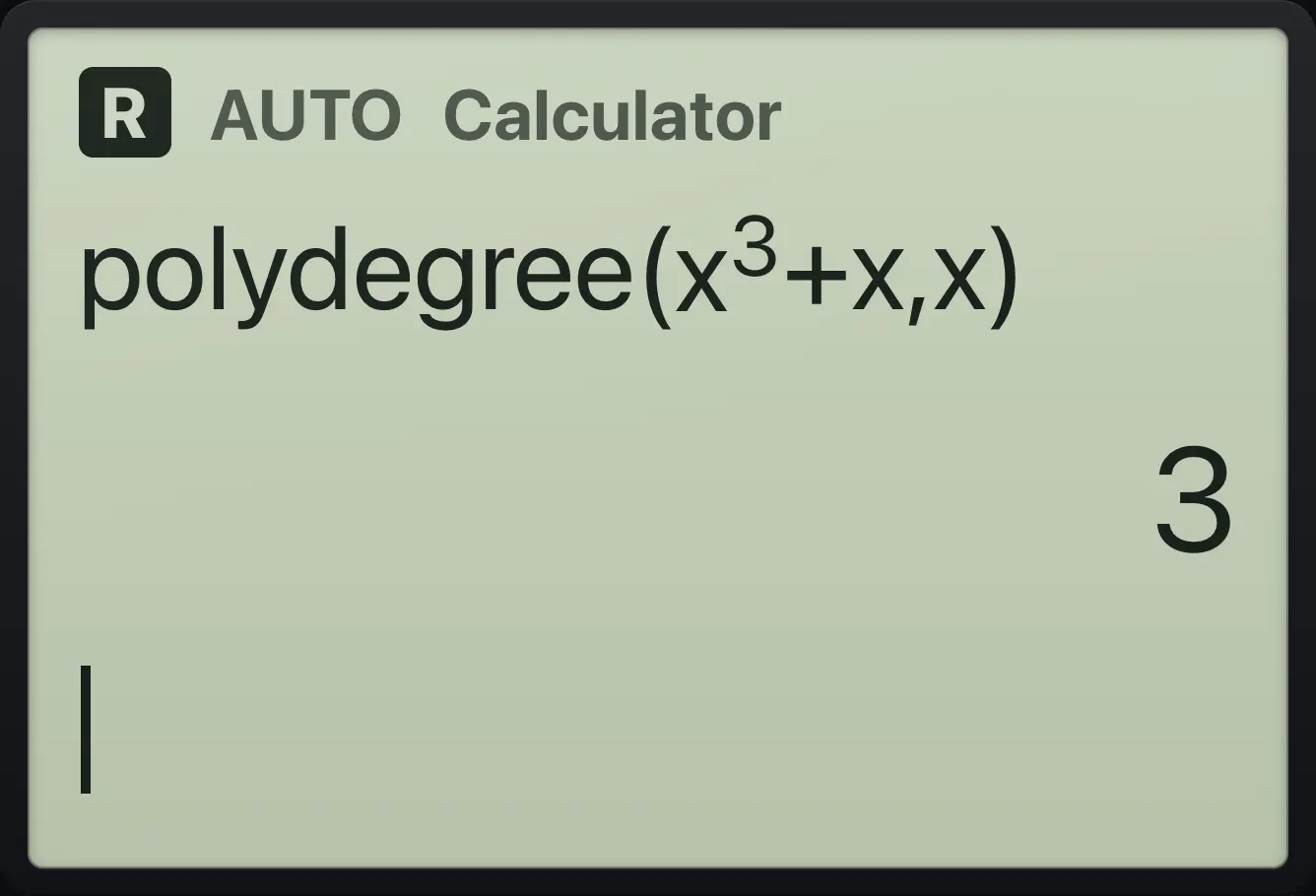
Result of the example "Degree" The display shows: polydegree(x^3+x,x) / 3.
You should see3
Example 8.25

Coefficients

  1. Type polyCoeffs(x²+3x+2, x).

    polycoeffs(x^2▶+3x+2,x)enter
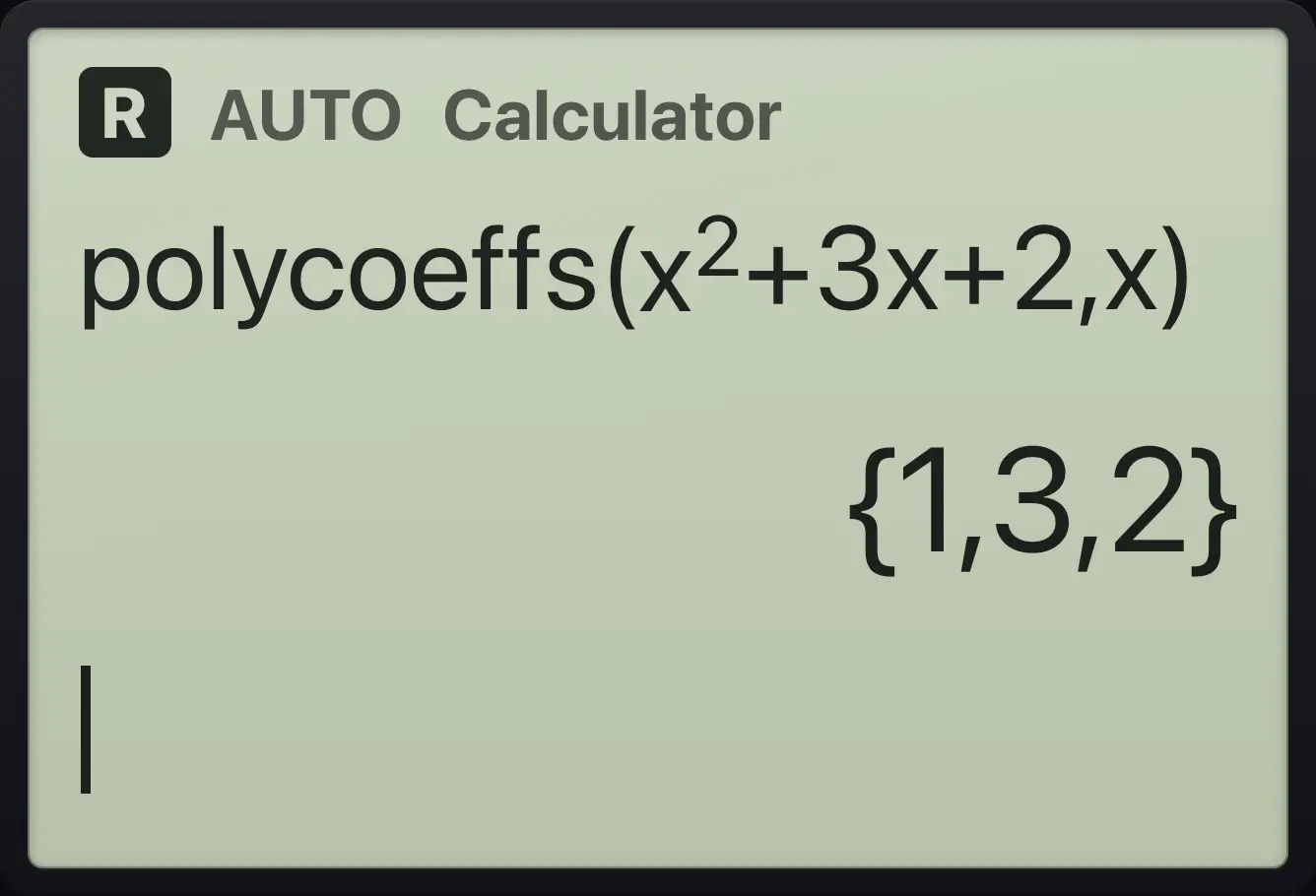
Result of the example "Coefficients" The display shows: polycoeffs(x^2+3x+2,x) / {1,3,2}.
You should see{1,3,2}

TI-Nspire CX CAS is a trademark of Texas Instruments Incorporated. Trident Calculator is an independent product by South View Studios and is not affiliated with, sponsored by or endorsed by Texas Instruments. The name is used only to describe the kind of calculator this model resembles; Trident's names, keys, display, fonts and software are its own clean-room design.